
BOREHOLE SEISMIC
Pike seismic source
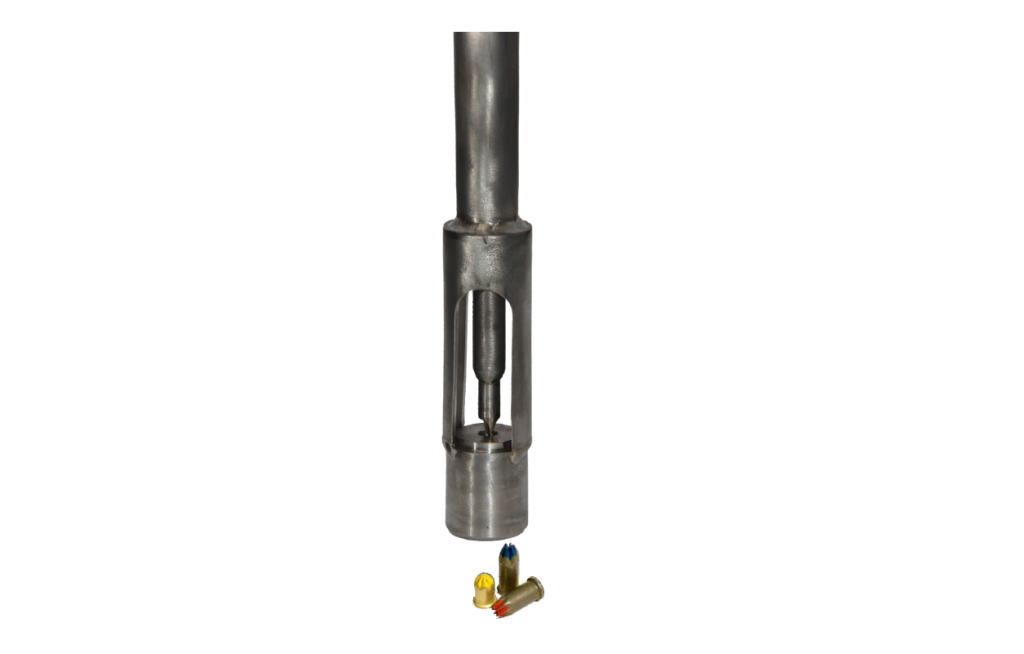
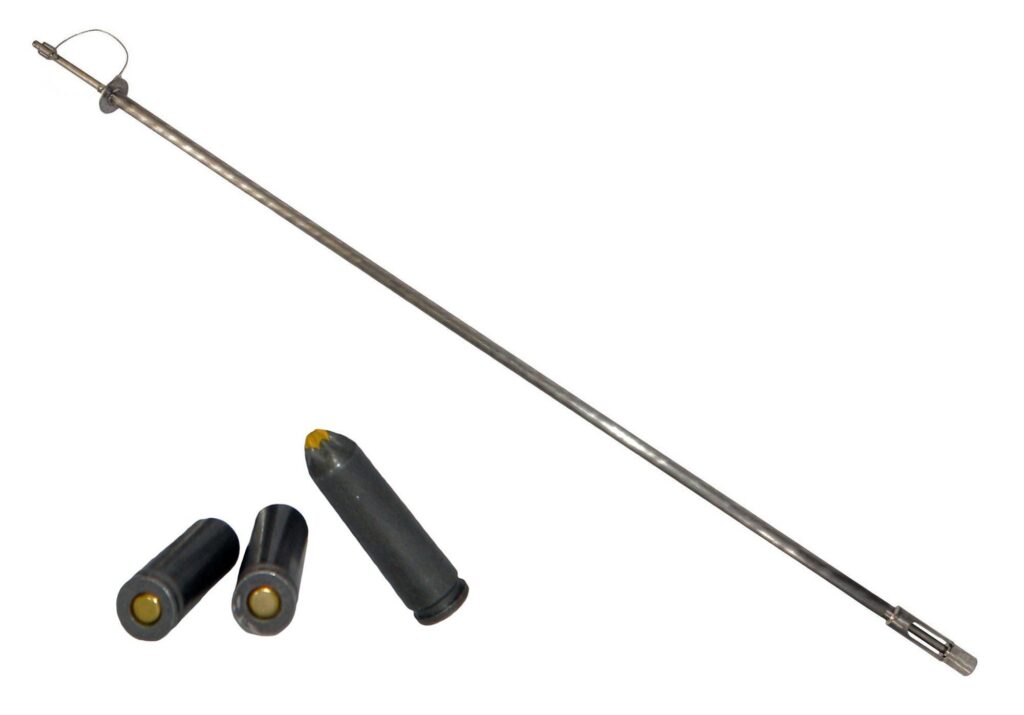
- Simple and reliable design
- Lightness — 1,5 kg
- Generating energy — up to 4 kJ
- Made of titanium alloy
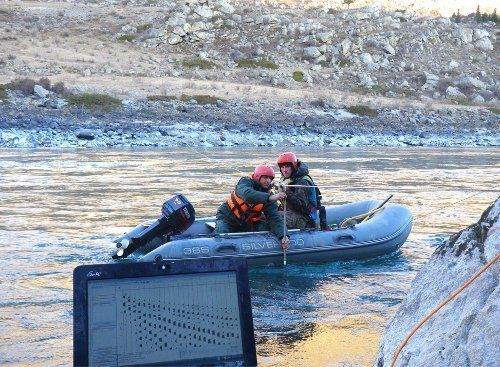
Pike is a powerful and easy-to-operate seismic source, specifically designed for seismic acquisition in transition zones, shallow water, waterlogged areas, and logged terrain—environments where traditional seismic sources such as sledgehammers or weight drops provide no result.
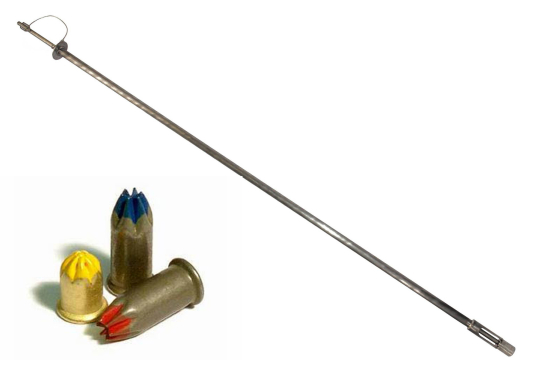
Seismic impulse is generated through the controlled detonation of commercially available construction-grade cartridges.
A cartridge with up to 800 joules of energy is usually sufficient for refraction seismic surveys reaching depths of around 30 to 50 meters, depending on ground conditions. For deeper targets or more challenging environments, more powerful cartridges—with higher energy output—can be used to generate stronger seismic signals and improve depth penetration.
Built from lightweight yet durable titanium alloy, the Pike offers an ideal balance of ruggedness, reliability, and portability. Its ergonomic and compact design ensures easy handling in the field, even in difficult or remote locations.
Advantages:
- High Energy Efficiency: Delivers up to 4.0 kJ per pulse, enhancing penetration depth in heterogeneous and attenuative media
- Broadband Source Signature: Extended frequency content enables improved resolution of near-surface stratigraphy and geotechnical features
- Field Adaptability: Operational in shallow water, marshes, logged zones, and other logistically constrained environments
- Ruggedized Construction: Titanium alloy body ensures long-term durability and minimal maintenance under adverse environmental conditions
- Repeatable Source Signature: Cartridge-based actuation ensures consistent energy output and wavelet shape for reflection and refraction studies
Whether it is an engineering and environmental site characterization, geohazard assessment or any other type of shallow reflection/refraction survey and MASW, Pike seismic source offers the performance, efficiency, and toughness needed to get reliable results in swamps and other challenging environments.
| Pike-6.8 | Pike-7.62 | |
| Charge type | nail gun cartridges | blank cartridges |
| Generating energy | 0.4 – 0.8 kJ | up to 4kJ |
| Trigger mode | manual | |
| Material | titanium alloy | |
| Length | 1.5 m | |
| Weight | 1.5 kg | |

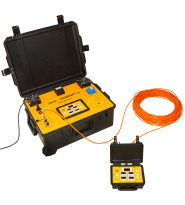
Energy sources Jack
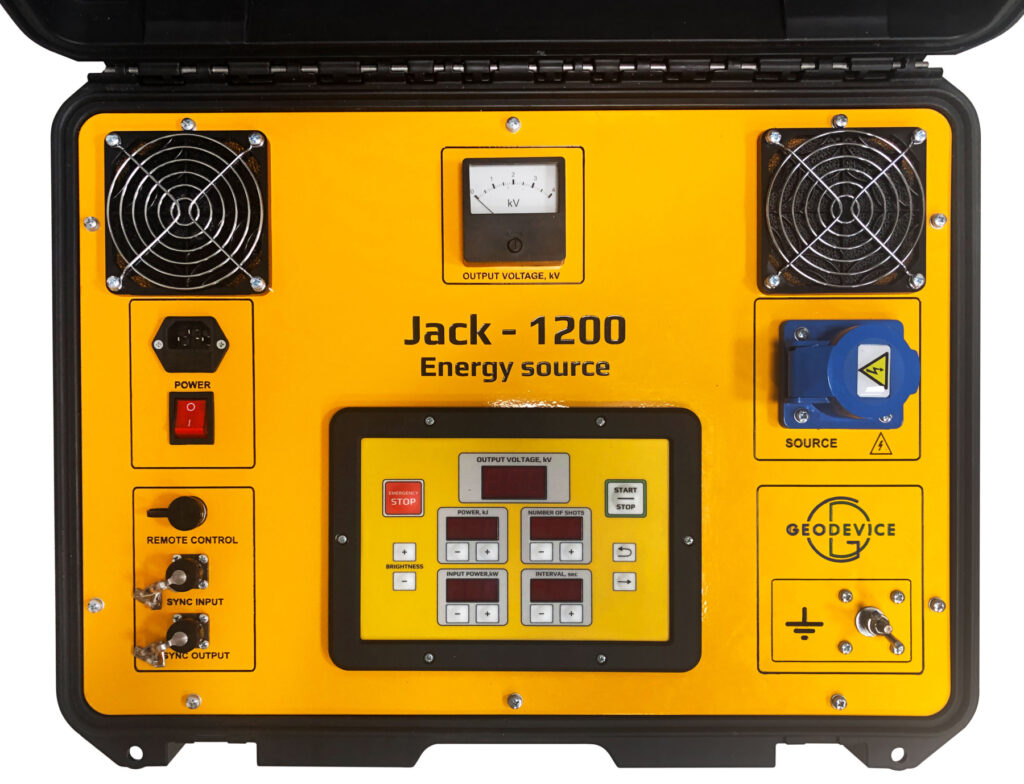
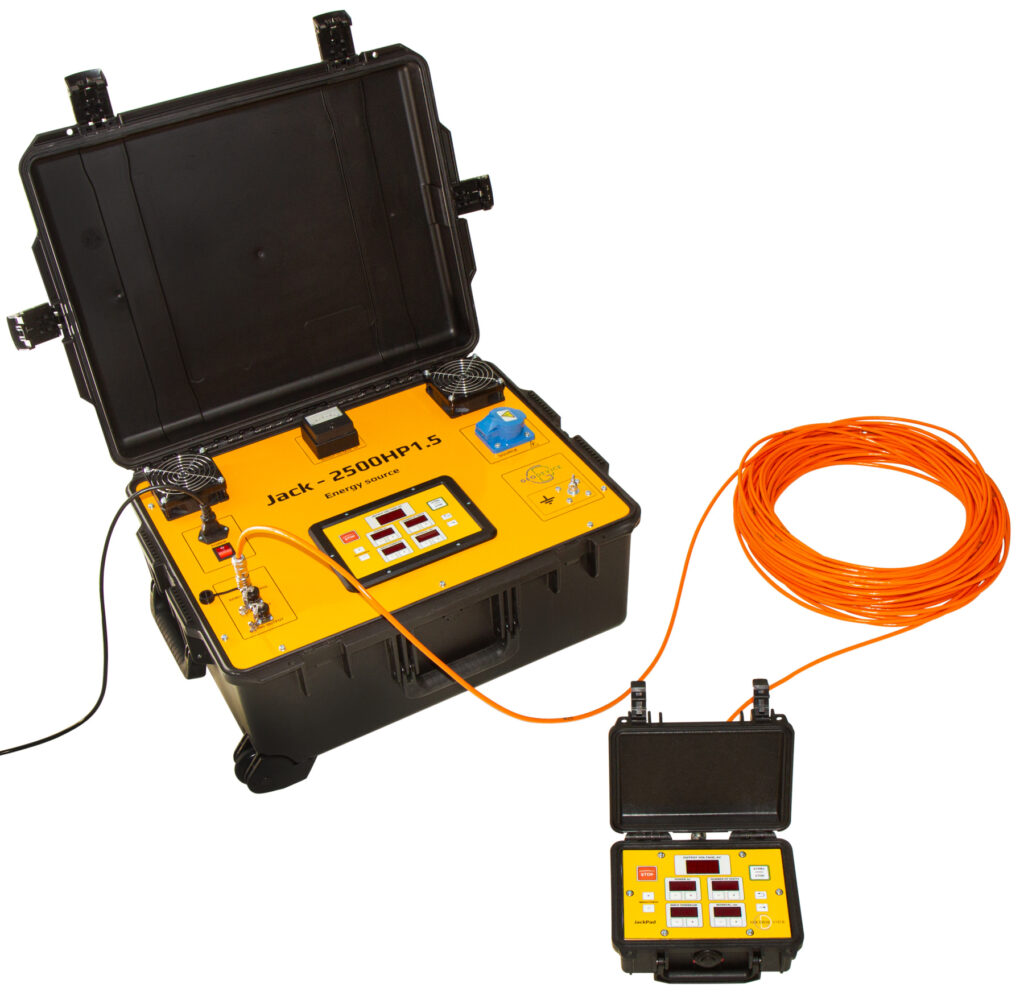
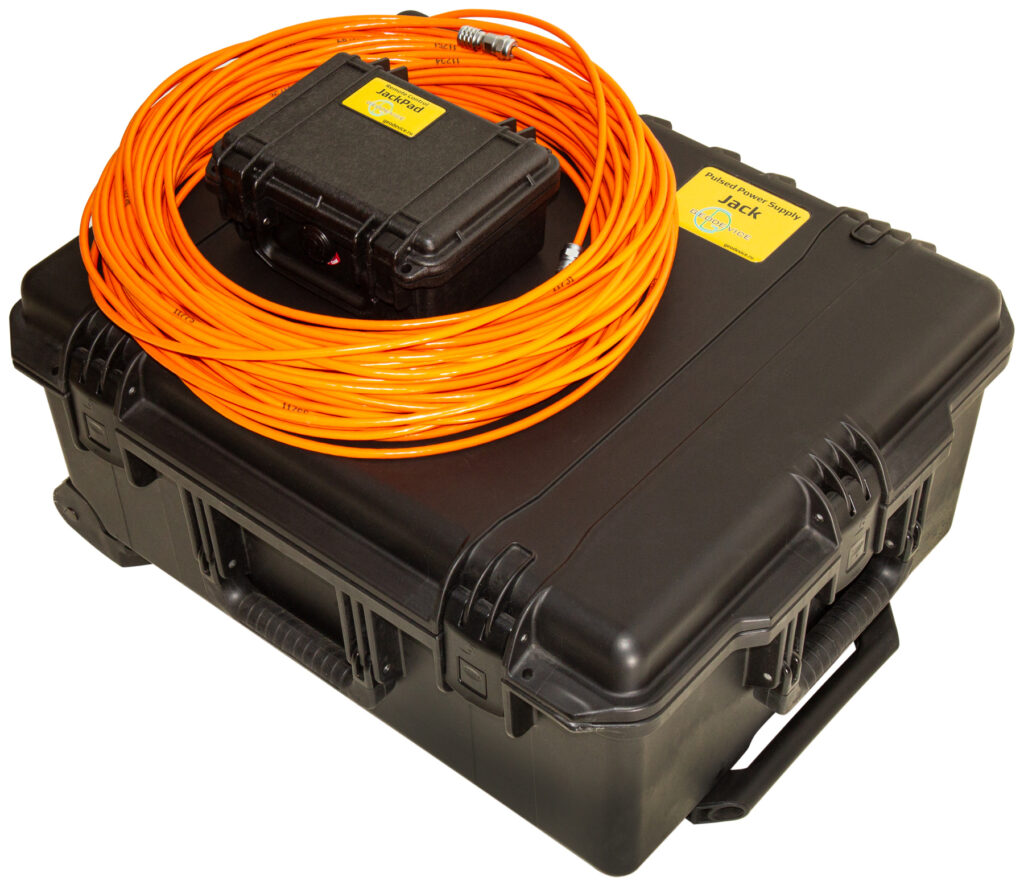
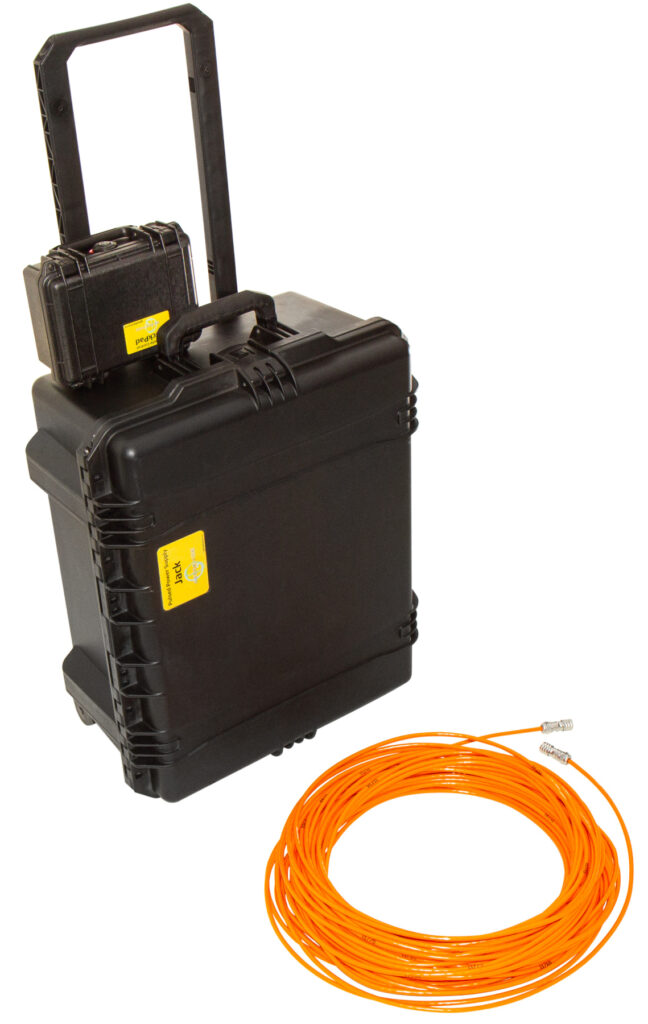
- High power and charging rate
- Remote control unit
- Up to 3 times lighter and more compact than analogues
- Easy control and programming of cycles
- Power consumption control
Jacks are the lightest, most compact, and fastest energy sources in the world that ensure the operation of borehole sparker and electrodynamic sources used in geophysical surveys including cross-hole seismic testing (ASTM D4428/D4428M) and tomography (CST), high-resolution VSP, and reverse VSP or vertical seismoacoustic profiling (VSaP).
Our convenient and intuitive Jack control panel allows flexibility in configuring the shooting mode. It is easy to program the cycle with the required number of shots and the period between them, the required energy and power consumption, as well as triggering from a seismic station or a synchronization system. Remote control unit JackPad duplicates the control panel and allows the seismic station operator to fully control the entire system. It is important to say that JackPad also provides additional safety of work.
In Jack-500 and Jack-1200 models, pulse chargers provide a charge rate 500 J/s. More powerful versions are equipped with even faster chargers with a rate up to 3000 J/s and adjustable maximum power consumption. Thus, all energy sources Jack can work with compact portable 110 / 220 V generators (with power from 1 kW). Jack’s design deploys a reliable thyristor key, that enables obtaining a really short high-voltage electric pulse.
Compact size, light weight, shockproof and dustproof casing, intuitive user interface, remote control unit, as well as high charging rate make energy sources Jack the most modern and truly mobile devices compared to all the alternatives available on the market. Specialized energy sources MultiJack that support the latest shooting technologies, as well as a whole line of sources and other necessary equipment are available for marine high-resolution seismic surveys.
Jack application areas:
- Borehole seismic surveys on land and in water areas using cross-hole seismic testing and tomography (CST), vertical seismic profiling (VSP), high-resolution VSP, reverse VSP, vertical seismoacoustic profiling (VSaP)
- Engineering surveys for the construction of highly sensitive facilities
- Search for karsts, fractured and deconsolidated zones, and mining geophysics
- Geotechnical monitoring of the soil foundation and determination of its load-bearing capacity, including in accordance with ASTM D4428 / D4428M standard
- Cracks location in concrete hydroelectric dams
- Mineral exploration
Delivery set:
- Energy source Jack
- Synchronization connector (2 pcs.)
- Power cable
- Documentation kit
In addition to energy sources Jack the following items can be purchased:
- Remote control unit JackPad
- Borehole sources of pressure (P) waves (Pulse) or shear (S) waves of horizontal (SHock) and vertical (GeoSV) polarization
- High frequency seismic stations Sigma 4+ and DAQlink 5
- Borehole hydrophone array WellStreamer
- Single and multi-level 3C borehole probes with spring (GStreamer), pneumatic (GStreamer-P), and electromechanical (GStreamer-E) anchoring systems
- Winches and reels BGW / BGW light / RT-4S for cable lines
- Borehole inclinometers INCLIS
- Universal switchbox for source connection
We can develop a custom energy source with the required power and configuration. For the correct specification of a custom design, please contact us using any method indicated on our website.
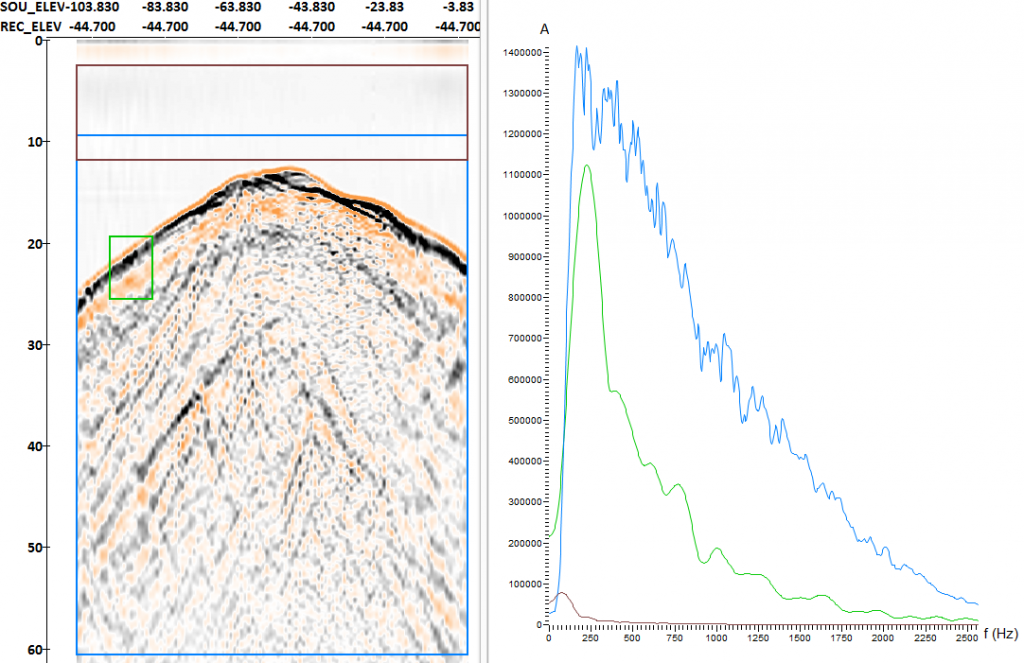
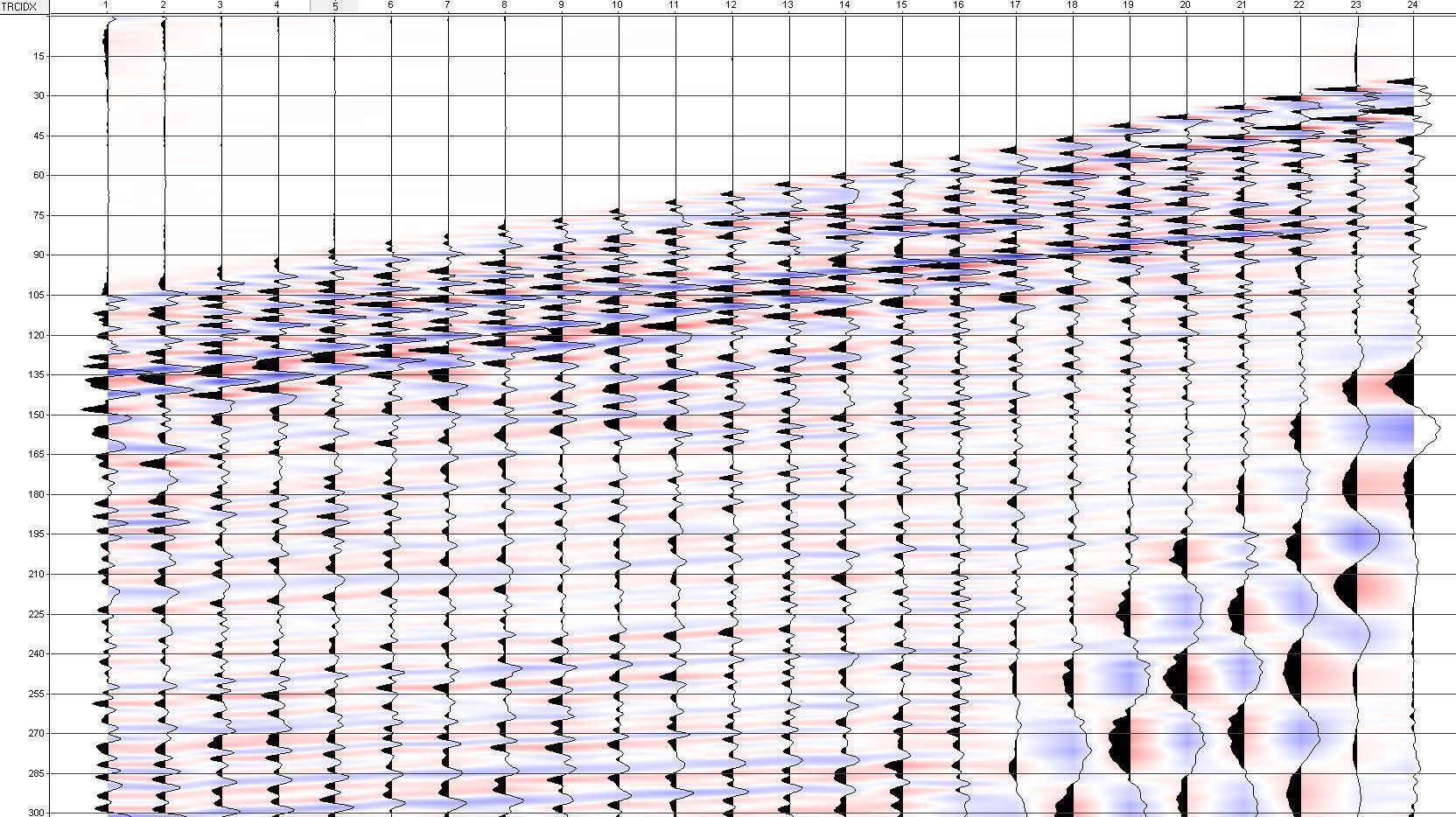
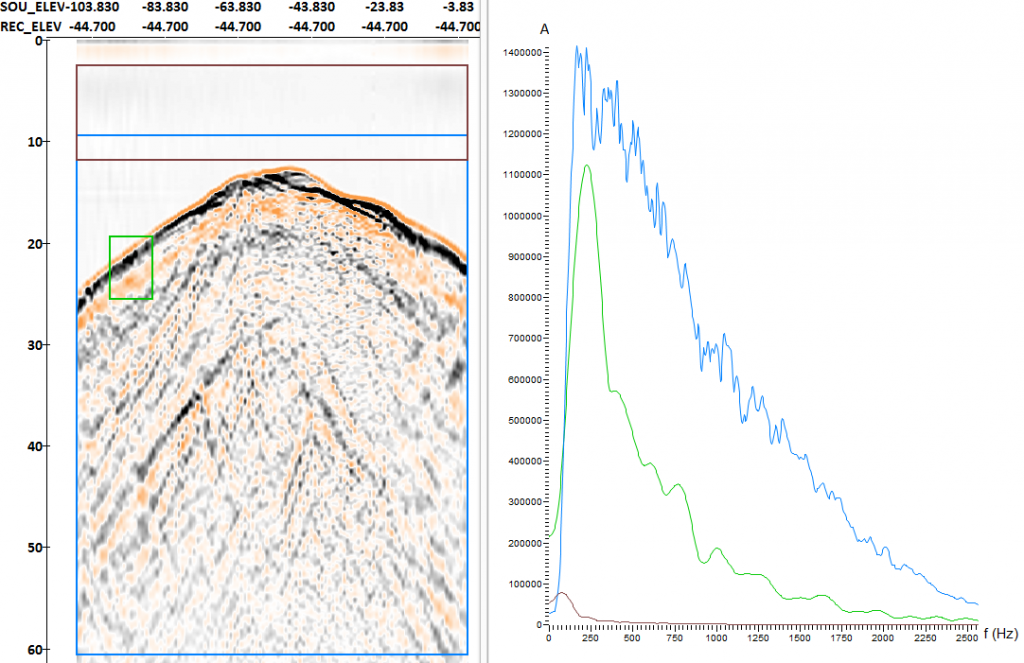
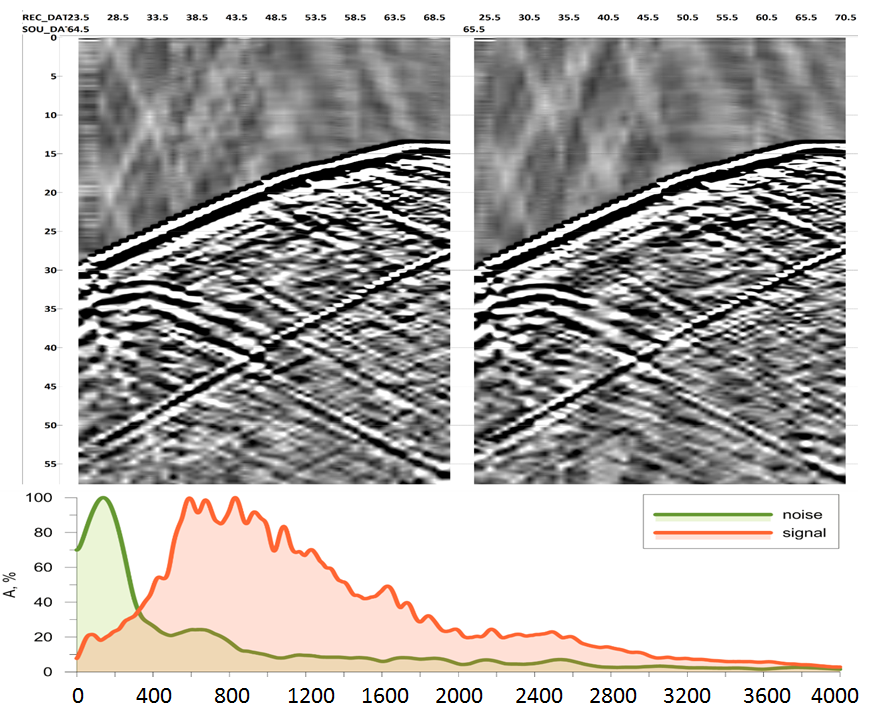
Example of CST field data and its spectrum. Blue — the entire wave pattern, green — the first break window, brown — noise before the target waves’ arrival). Data obtained with borehole sparker Pulse, energy source Jack-2500HP, and hydrophone array WellStreamer.
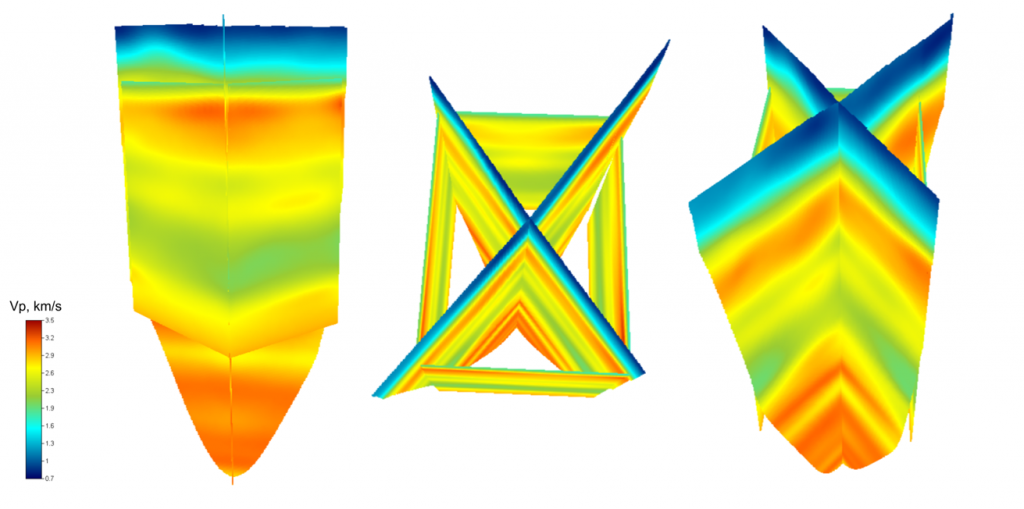
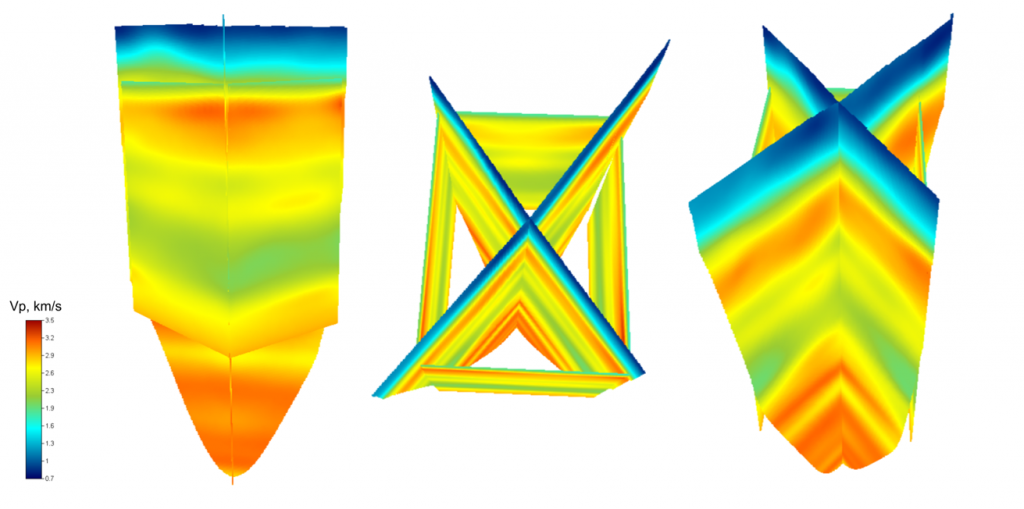
CST data obtained with borehole sparker Pulse, energy source Jack-2500HP and hydrophone array WellStreamer. The distance between the central and lateral wells is about 30 m.
| Model | Jack-500 | Jack-1200 | Jack-2500HP | Jack-5000HP | Jack-10000HP |
| Operating voltage | 2-4 kV (standard) or 4-6 kV (option) | ||||
| Charger type | pulse | ||||
| Trigger mode | external / periodic / programmable / manual | ||||
| Operating energy | 50 – 500 J | 300 – 1 200 J | 300 – 2 500 J | 300 – 5 000 J | 300 – 10 000 J |
| Maximum charging rate up to 4 or 6 kV | 500 J/s | 500 J/s | 1 500 J/s | 3 000 J/s | 3 000 J/s |
| Minimum period of operation at the minimum pulse energy | 0.4 s | 1.4 s | 0.6 s | 0.4 s | 0.4 s |
| Minimum period of operation at the maximum pulse energy | 1.2 s | 2.7 s | 1.8 s | 1.9 s | 3.6 s |
| Programmable number of pulses in a series | 1 – 99 or infinite | 1 – 99 or infinite | 1 – 99 or infinite | 1 – 99 or infinite | 1 – 99 or infinite |
| Power requirements | 100-127 or 220-240 V, 50/60 Hz | ||||
| Power consumption | 1 kW | 1 kW | 1 / 2 / 3 kW | 1 – 6 kW in 1 kW increments | 1 – 6 kW in 1 kW increments |
| Overall dimensions | 490 × 370 × 230 mm | 540 × 410 × 270 mm | 630 × 500 × 300 mm | 580 х 590 х 690 mm | 580 х 590 х 1000 mm |
| Weight | 18 kg | 22 kg | 34 kg | 99 kg | 130 kg |
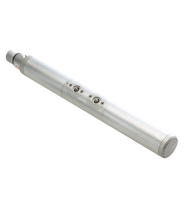
Borehole source of SV-waves GeoSV 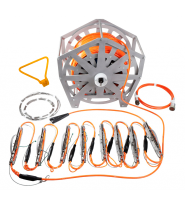
GStreamer – 3C multi-level downhole seismic array with spring anchoring
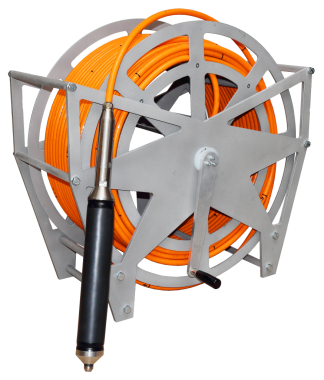
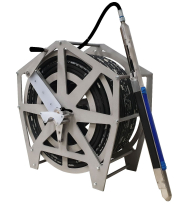
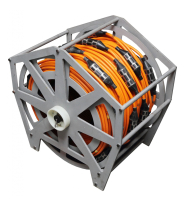
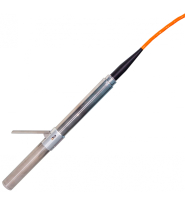
Borehole sparker Pulse
- Easily replaceable electrode group
- Broadband and stable signature
- Different groups for adjusting wavelet shape and its amplitude spectrum
- Wells diameter from 40 mm
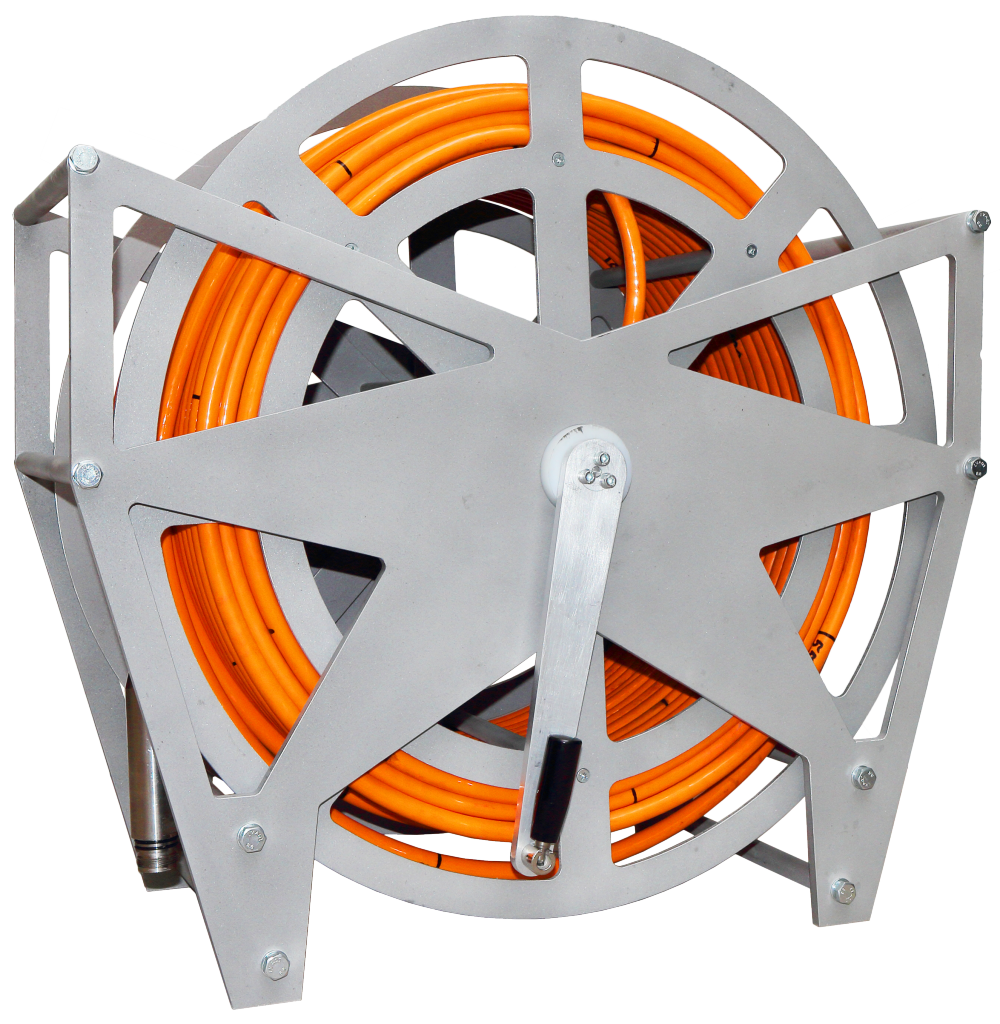
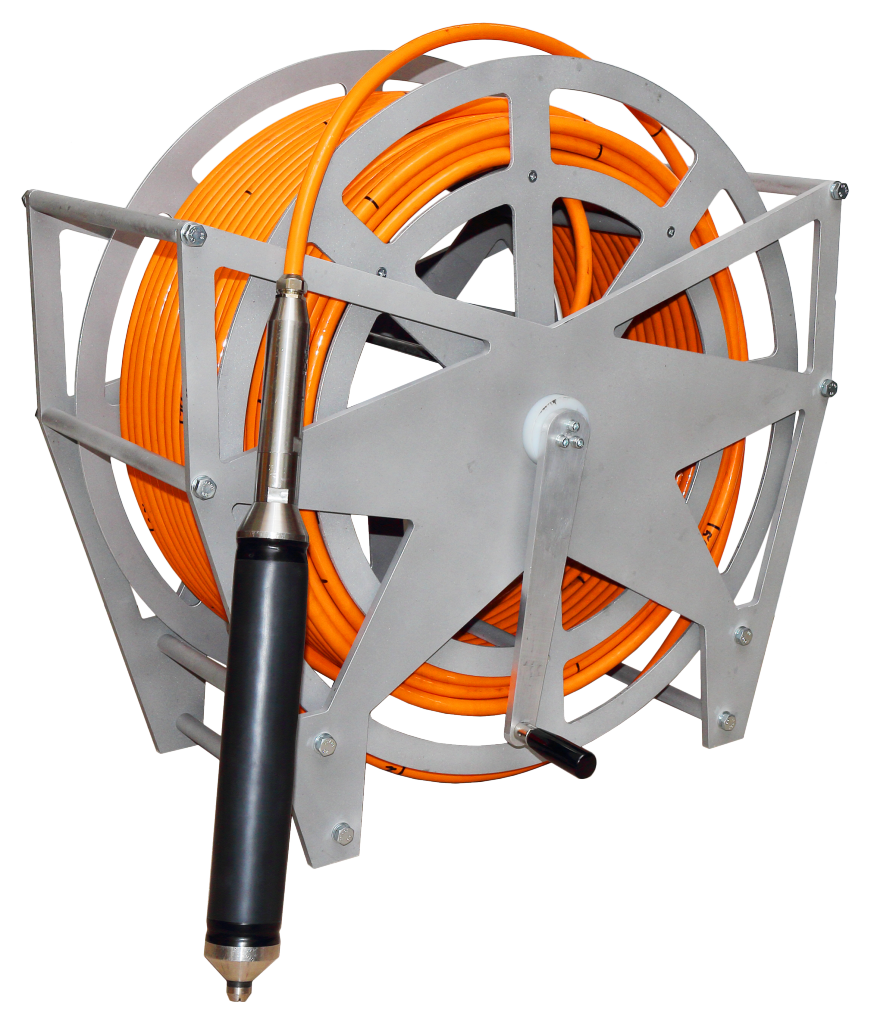
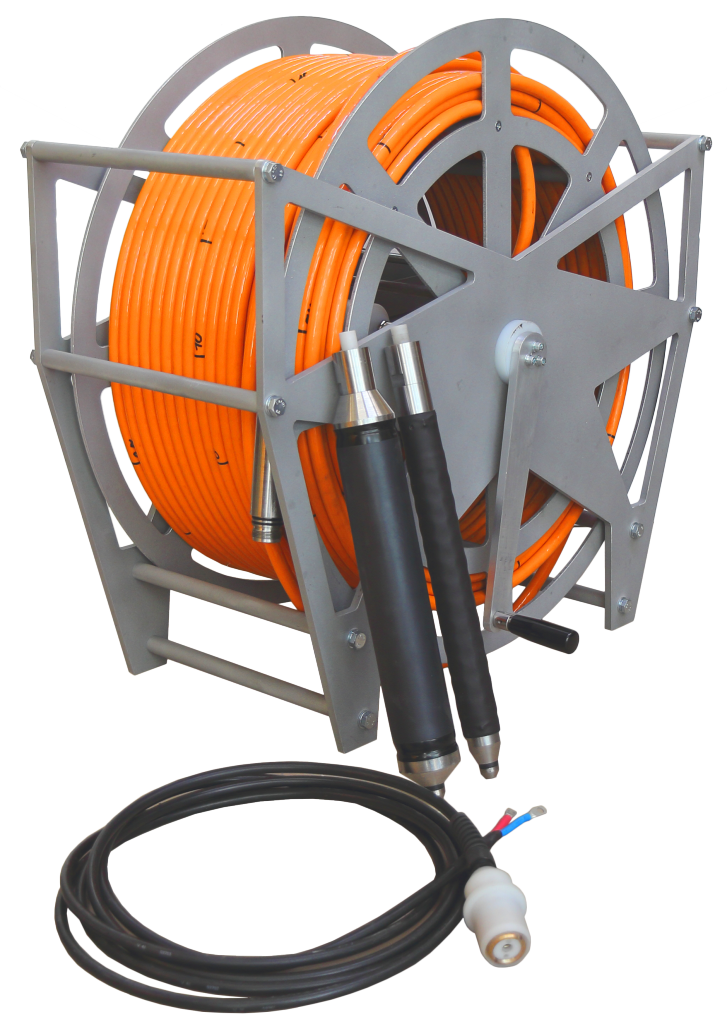
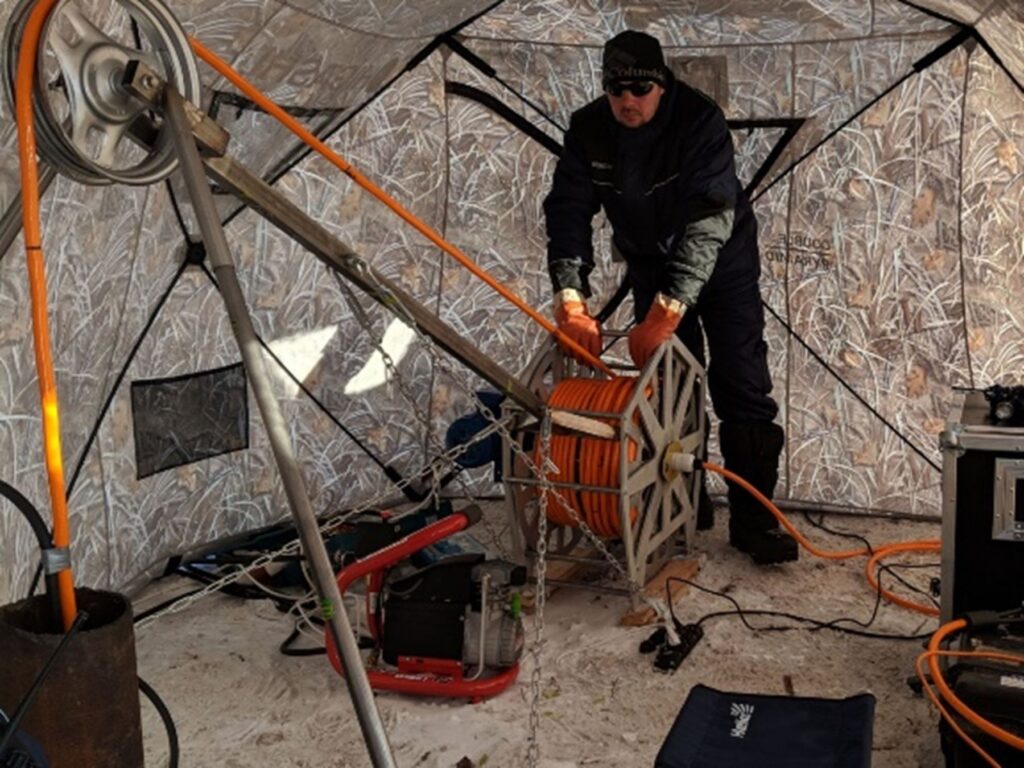
- Supplied with specially designed cables, reels, or winches with HV slip ring
Borehole sparker Pulse is developed for generating high frequency pressure (P) waves in water-filled wells of up to 1000 m deep during crosshole seismic testing or tomography (CST), vertical seismic profiling (VSP) and other acquisition techniques with borehole source. The generation of polarized shear waves (SH and SV) is provided by sources SHock and GeoSV. All these sources require pulsed power supply Jack.
Jack energy source generates a short high-voltage electric pulse of considerable energy, which is transferred to the electrode group of the sparker ensuring the formation of ionized high-pressure gas-vapor cavities. With explosive expansion of the cavity, the pressure in it rapidly decreases, resulting in a drop in the temperature, vapor condensation, and subsequent collapse of the cavity, which does not generate parasitic pulsations.
We have developed special type of electrodes from unique material that prevents tips from wearing and provides exceptionally stable signature over a long period of time. The design of the sparker Pulse provides easy replacement of electrode groups including for controlling the source signature. Multi-electrode versions are necessary to generate high frequency seismic pulses. Special versions with a small number of electrodes provide a decrease in the signal frequency and a significant increase in the signal-to-noise ratio at long source to receiver distances in high attenuation medium. The standard diameters of the containers 36 / 60 / 80 mm allow to operate in wells with diameters starting from 40 mm.
Sparkers Pulse are supplied on geophysical reels equipped with high-voltage slip rings. Thus, one does not need to disconnect the source from the energy source while winding / unwinding the cable. The convenience and safety of work in deep wells are ensured by specialized winches BGW and BGW light.
Pulse application areas:
- Borehole seismic surveys on land and in water areas using cross-hole seismic testing and tomography (CST), vertical seismic profiling (VSP), high-resolution VSP, reverse VSP, and vertical seismoacoustic profiling (VSaP)
- Engineering surveys for the construction of highly sensitive facilities
- Search for karsts, fractured and deconsolidated zones, and mine geophysics
- Geotechnical monitoring of the soil foundation and determination of its load-bearing capacity, including in accordance with the ASTM D4428 / D4428M standard
- Cracks location in concrete hydroelectric dams
- Mineral exploration
Delivery set:
- Sparker Pulse with one electrode group and container
- HV cable
- Reel with high-voltage slip ring
- Energy source Jack connection cable
In addition to sparker Pulse the following items can be purchased:
- Winches BGW and BGW light
- Additional electrode groups and containers
- Energy source Jack with remote control JackPad
- Borehole hydrophone array WellStreamer
- Single and multi-level 3C borehole probes with spring (GStreamer), pneumatic (GStreamer-P), and electromechanical (GStreamer-E) anchoring system
- High frequency seismic stations Sigma 4+ and DAQlink 5
- Borehole sources of shear S-waves of horizontal (SHock) and vertical (GeoSV) polarization
- Borehole inclinometers INCLIS
- Downhole pulley
Specialized freshwater and marine sparkers, as well as electrodynamic boomers powered by specialized energy sources MultiJack which support the latest shooting technologies are available for marine high-resolution seismic surveys.
We can develop a custom borehole sparker and an energy source with the required power and configuration. For the correct specification of a custom design, please contact us using any method indicated on our website.
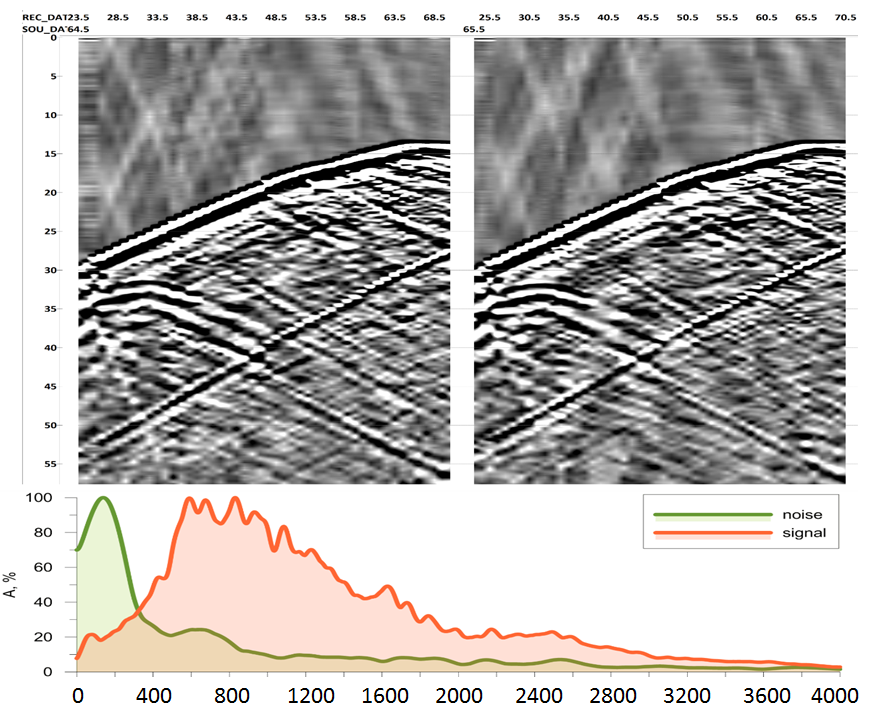
CST on P-waves field data obtained using sparker Pulse, energy source Jack, and hydrophone array WellStreamer: Above — crosshole seismic tomography field data; below — amplitude spectra of target waves and noise before the first breaks
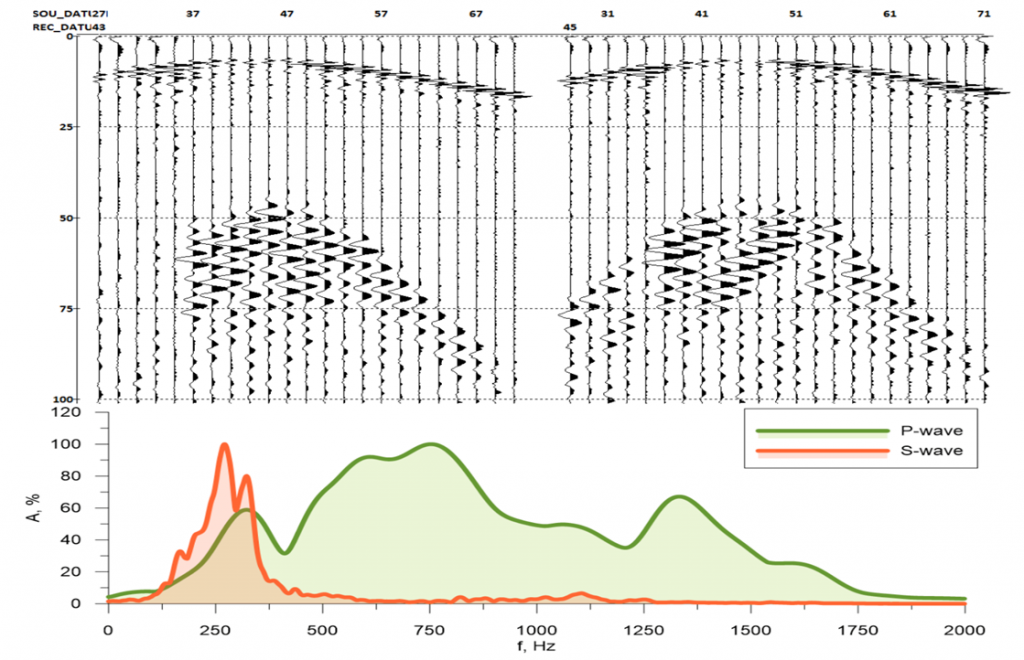
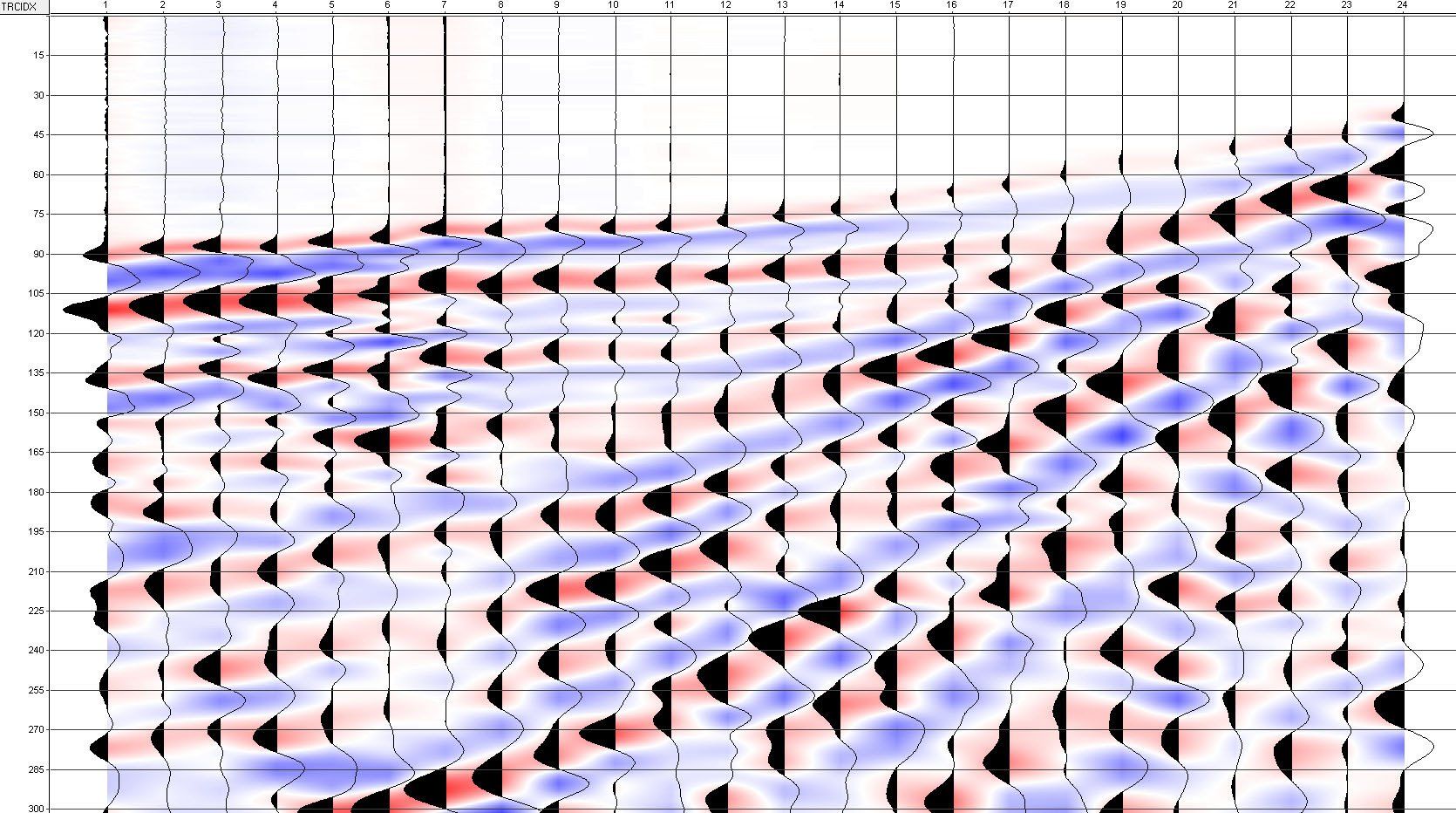
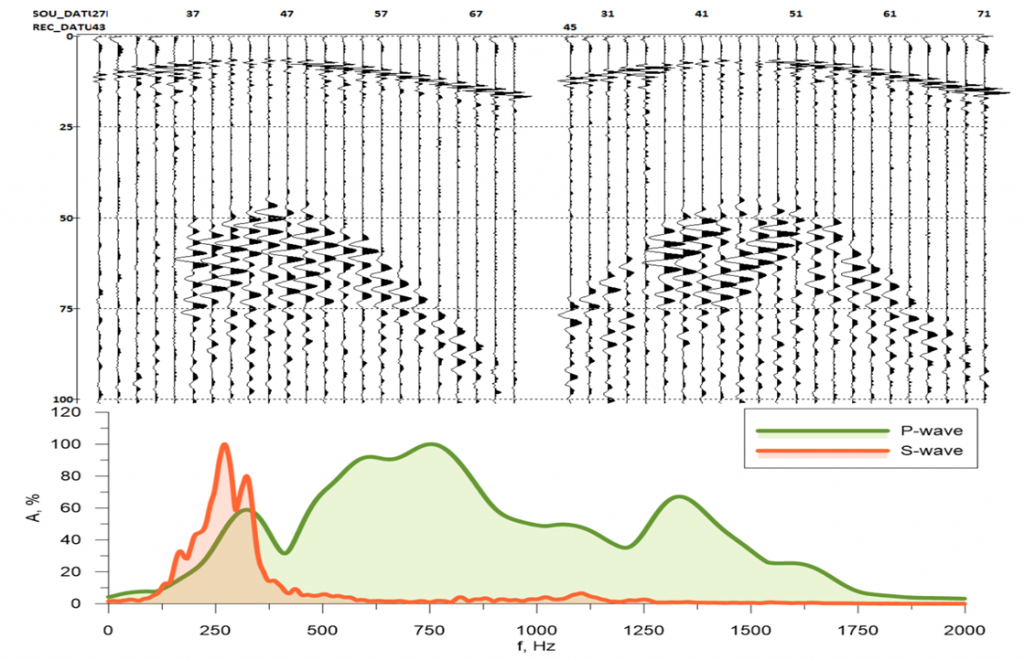
Example of raw CST field data obtained with 3C downhole probe and sparker Pulse. Above — crosshole seismic tomography field data; below — amplitude spectra for P and S waves.
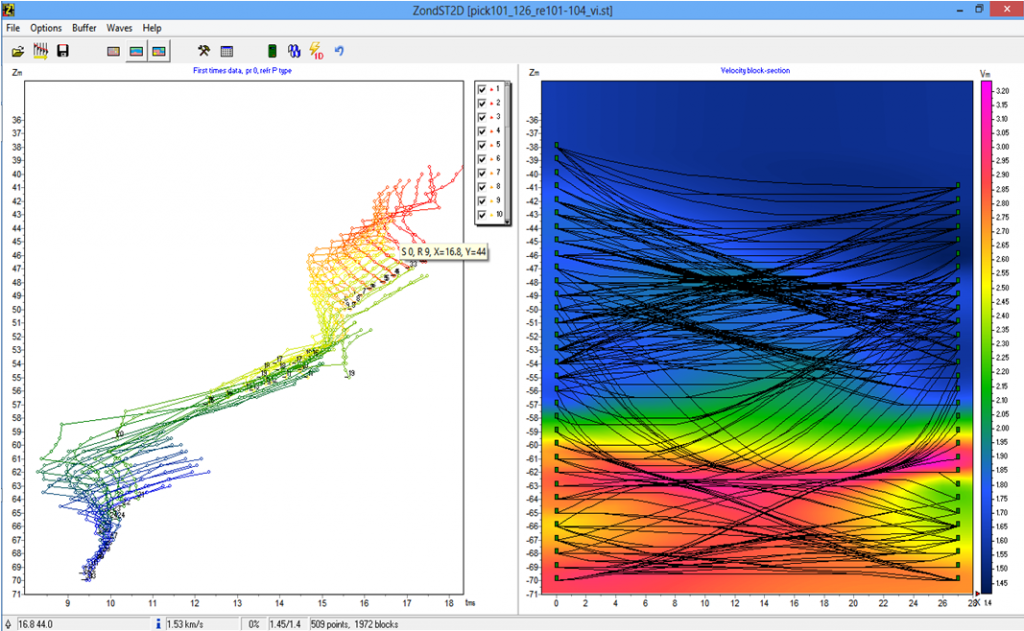
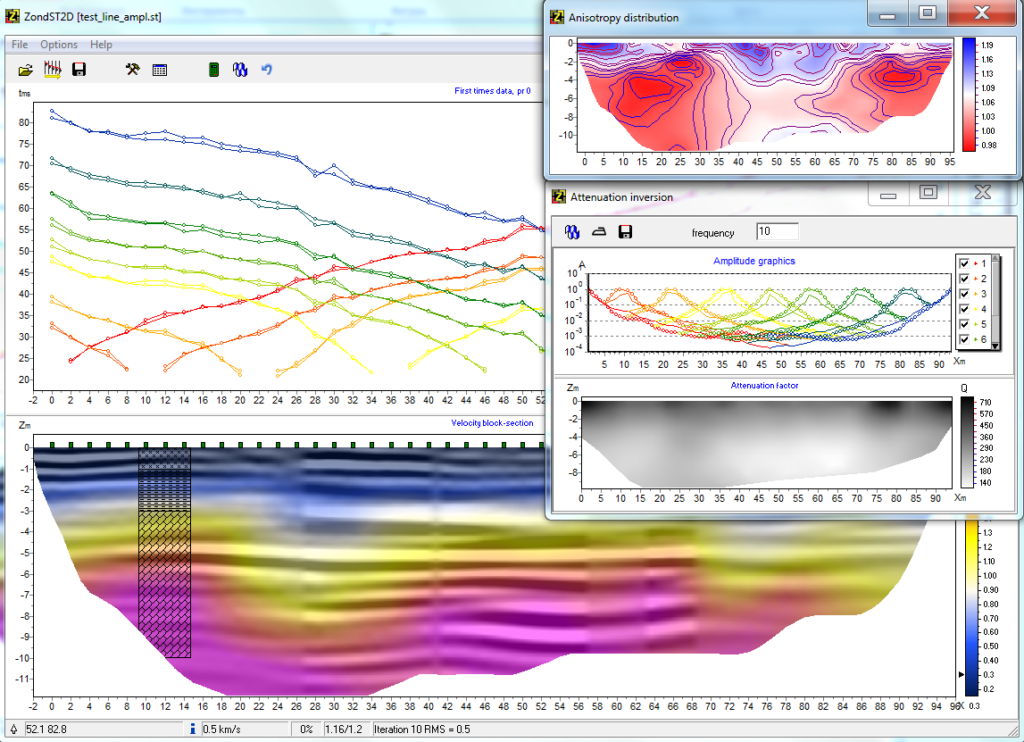
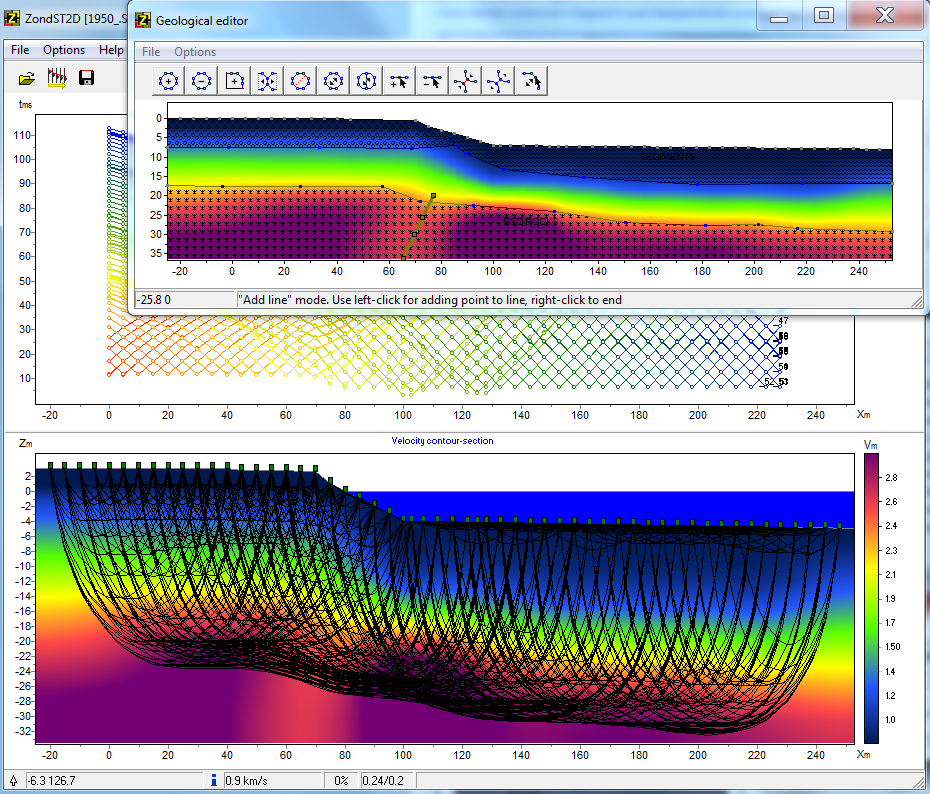
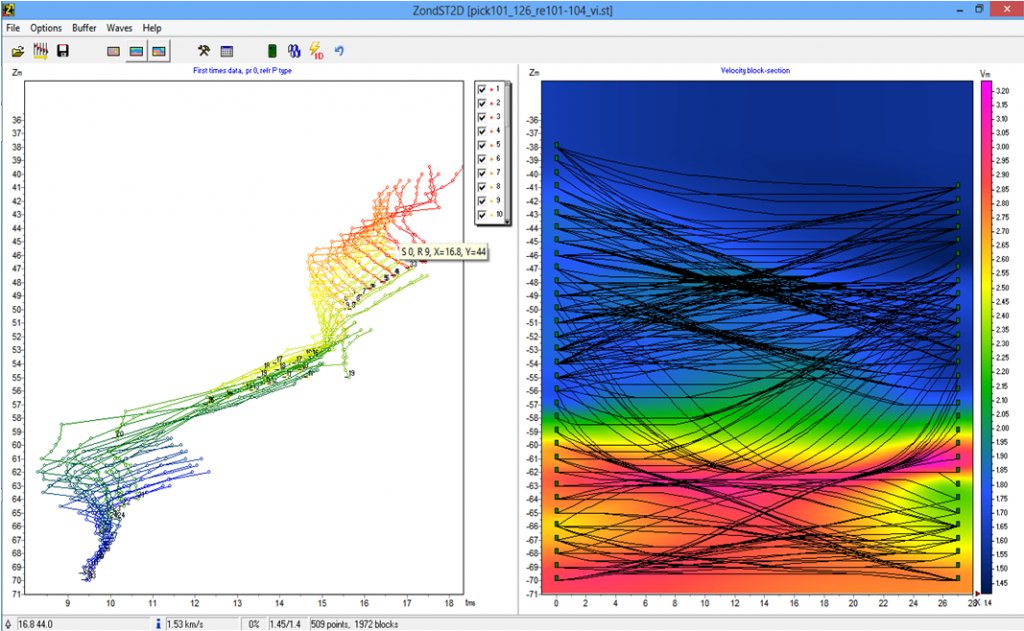
2D inversion in ZondST2d software. On the left, the comparison of observed and calculated hodographs; on the right, the reconstructed velocity model with ray tracing. Karst cavity in the right side of section in limestone basement; in the left part fractured and deconsolidated zone with decreased velocity.
| Operating voltage | up to 6 000 V |
| Operating energy | up to 1500 J (optionally: up to 10 000 J and more) |
| Borehole diameters | from 70 mm (optionally: from 40 mm) |
| Maximum borehole depth | 1 000 m |
| Reel dimensions | 760×775×400 mm |
| Weight of the sparker with a reel | 60 – 70 kg (depends on the cable length) |
| Sparker diameter | 60 mm (optionally: 36 or 80 mm) |
| Sparker length | 500 mm |
| Cable type | coaxial with reinforced polyurethane insulation |
| Conductor cross-section | 10 mm2 (optionally: 20 or 50 mm2) |
| Breaking strength of the cable | 3 kN (optionally: 5 and 30 kN) |
GStreamer – 3C multi-level downhole seismic array with spring anchoring 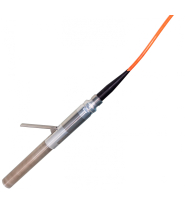
GStreamer-P – multi-level 3C borehole seismic array with pneumatic anchoring system
Borehole source of SH and P waves SHock
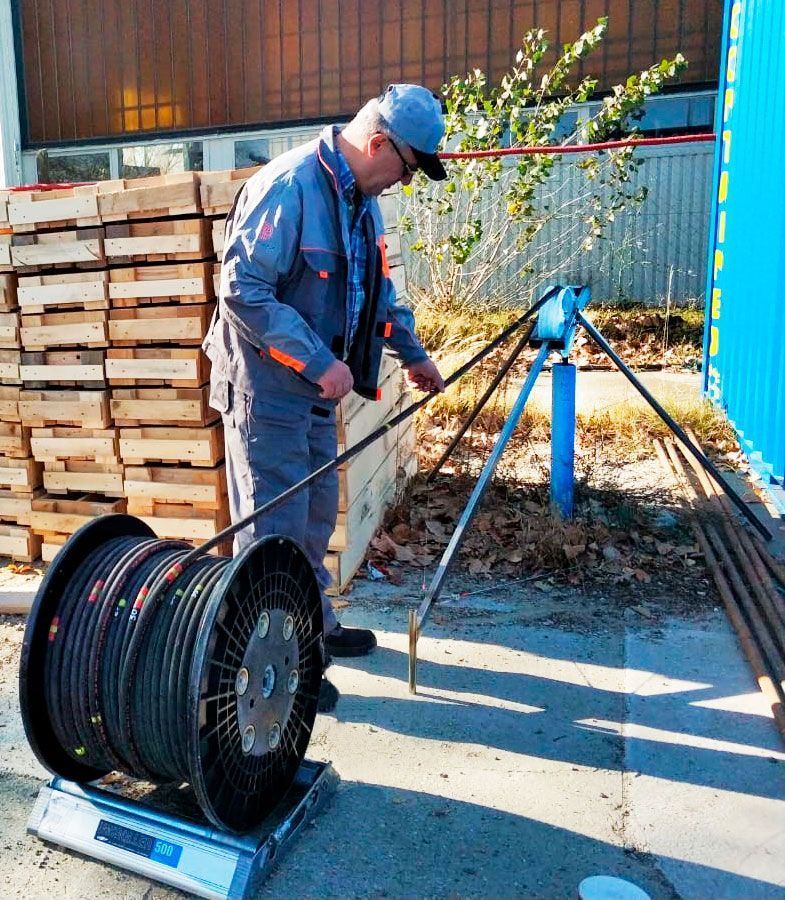
- P and SH wave generation
- Suitable for CST and VSP
- High frequency repeatable signal
- Operations in dry and water-filled wells
- HV slip ring on the winch
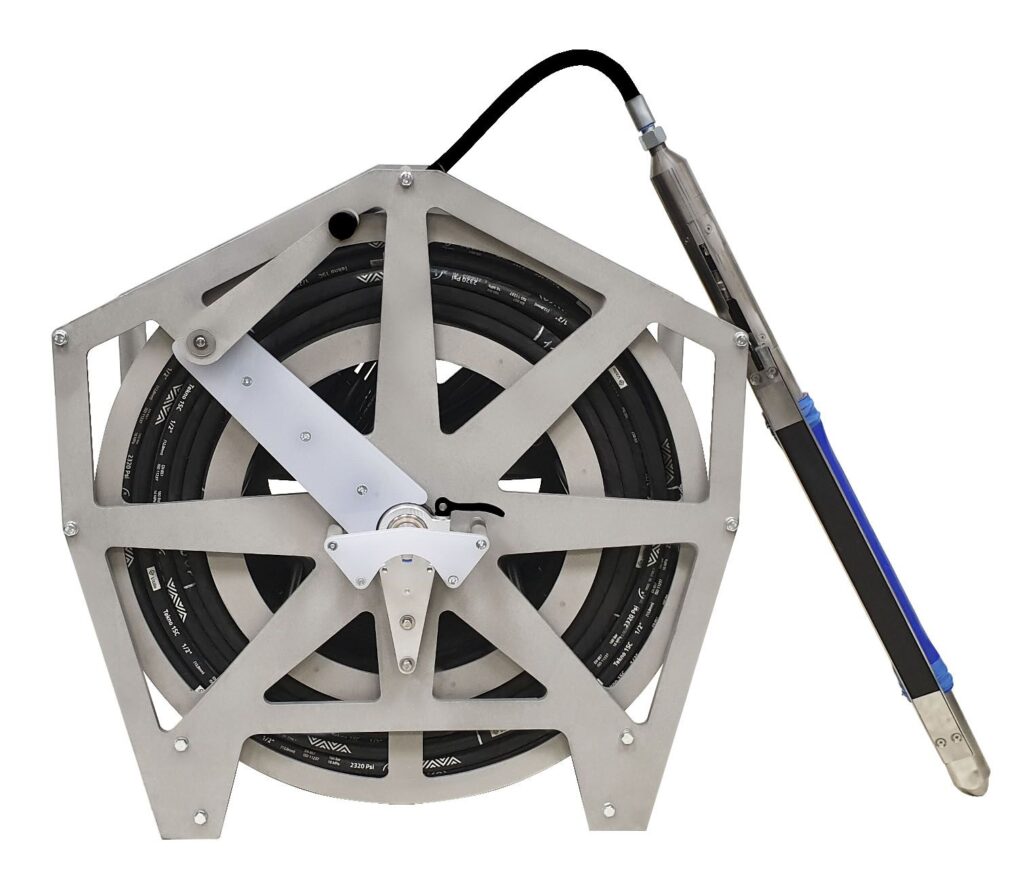
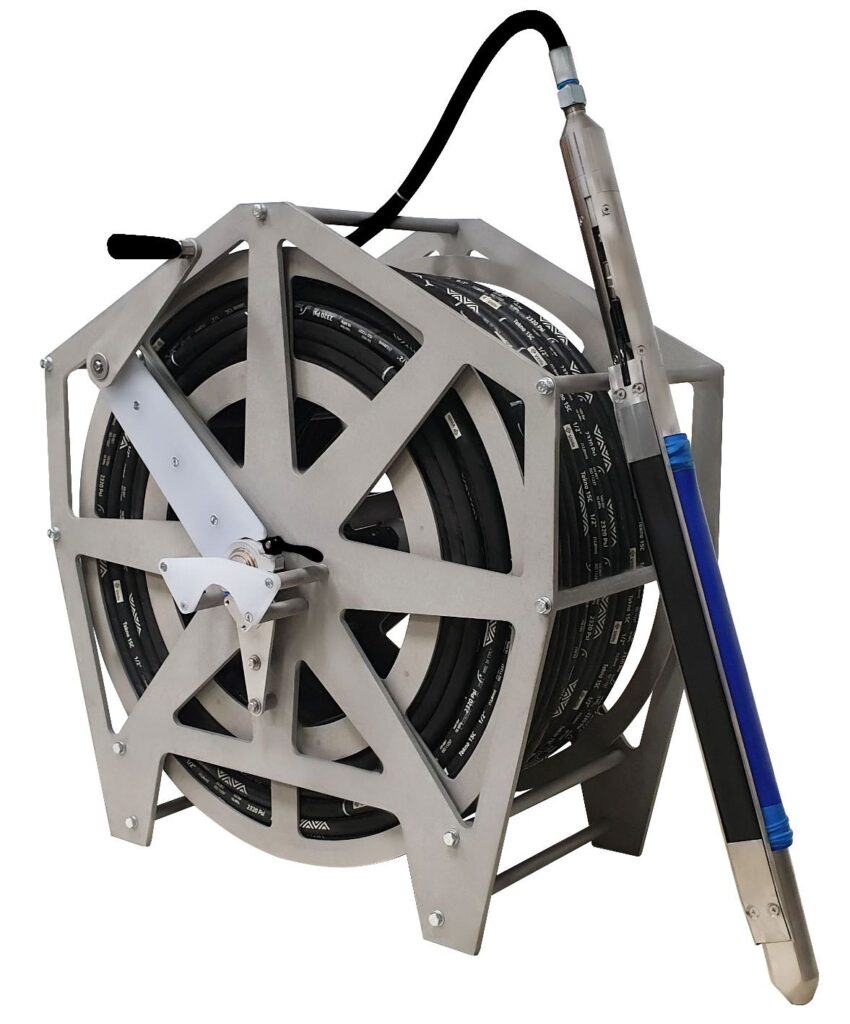
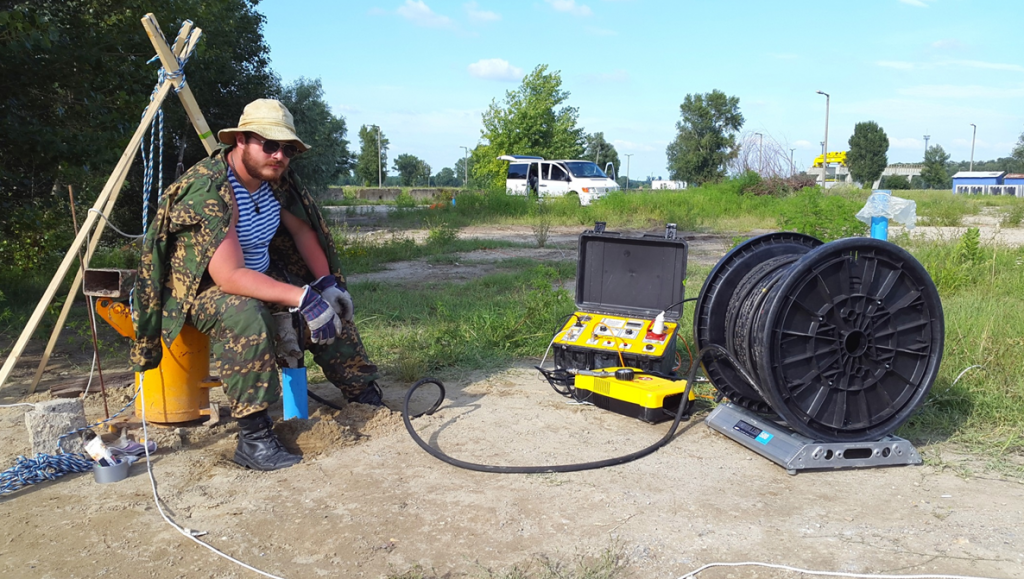
SHock is a unique borehole source, which is designed for generating horizontally polarised Shear Waves (SH) and Compressional Waves (P) for reversed Vertical Seismic Profiling (VSP) and Crosshole Seismic Testing or Tomography (CST). SHock is an easy-to-operate high-repeatable seismic source, which can be used both in dry and water-filled wells in combination with energy source Jack.
A rigid pneumo-electric line provides accurate source rotation in the well for generating shots with opposite SH-wave polarization for further signal-to-noise ratio enhancement during the processing and possibility to clearly identify S-waves by reversed polarity. Due to its electrodynamical nature, SHock generates high frequency energy pulse, which results in high resolution seismic gathers suitable for very accurate first break picking and providing very detailed VSP seismic sections.
To provide fast infield seismic borehole acquisition, SHock source is supplied on a reel with a high-voltage slip ring and pneumatic fitting. It allows to acquire seismic data without need of disconnecting the energy source and compressor during winding the cable.
SHock standard set includes:
- SHock source
- Pneumo-electric line
- Reel with high-voltage slip ring
- Reel and energy source connection wire
- Air compressor (option)
To perform CST on P and S waves following equipment is required:
1. Energy source Jack
2. GStreamer with the seismograph (DAQlink 5)
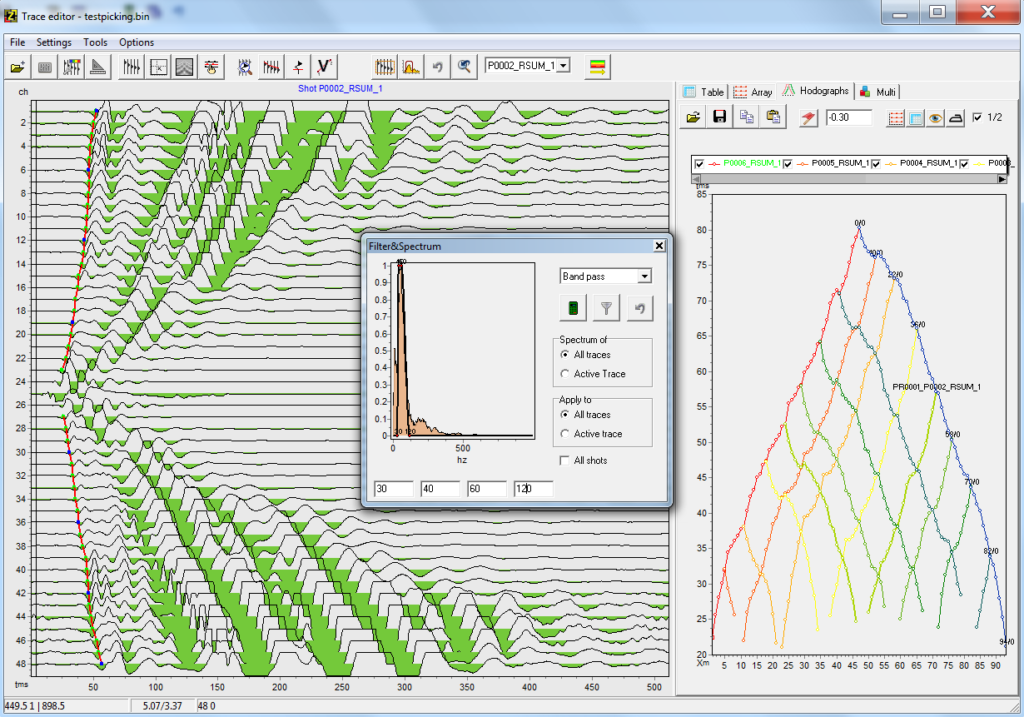
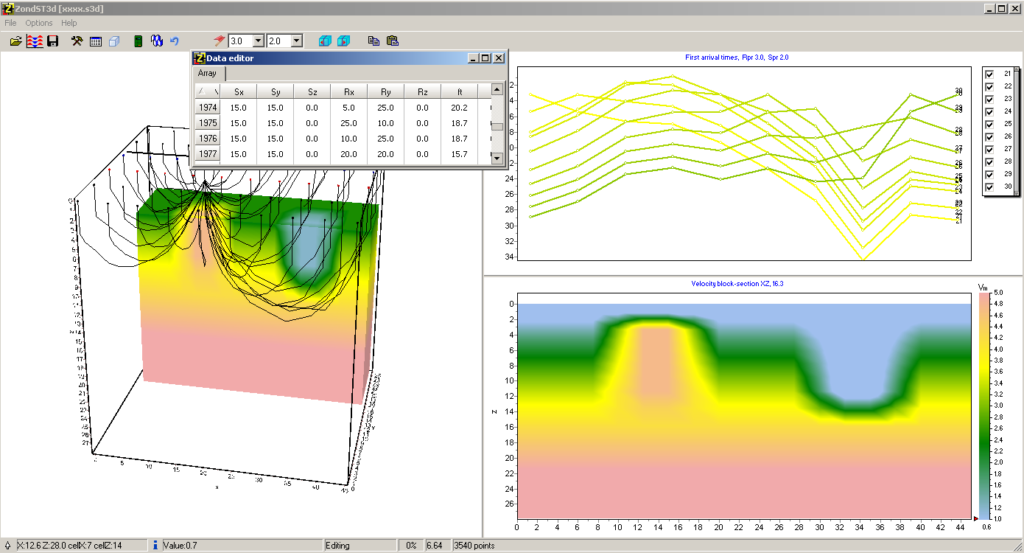
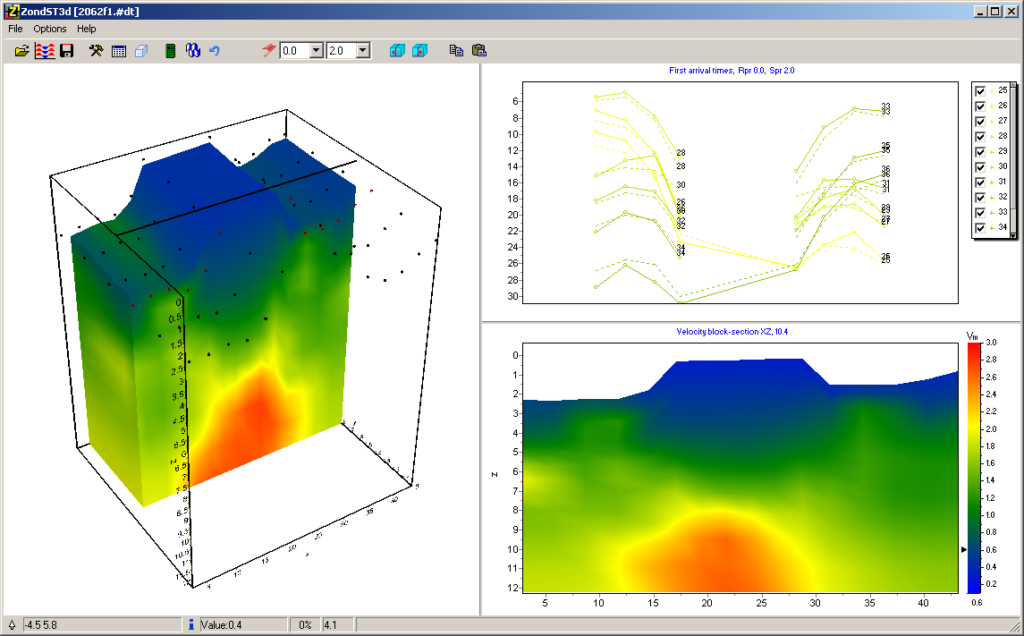
3. RadExPro for data processing and ZondST2d/ZondST3d for tomography inversion.
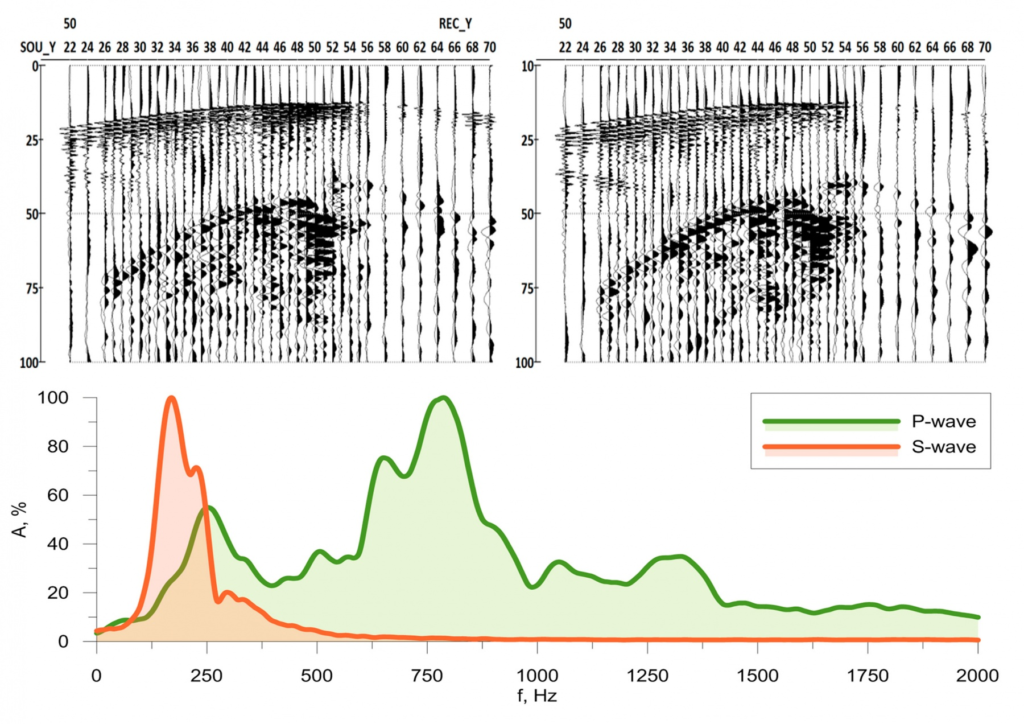
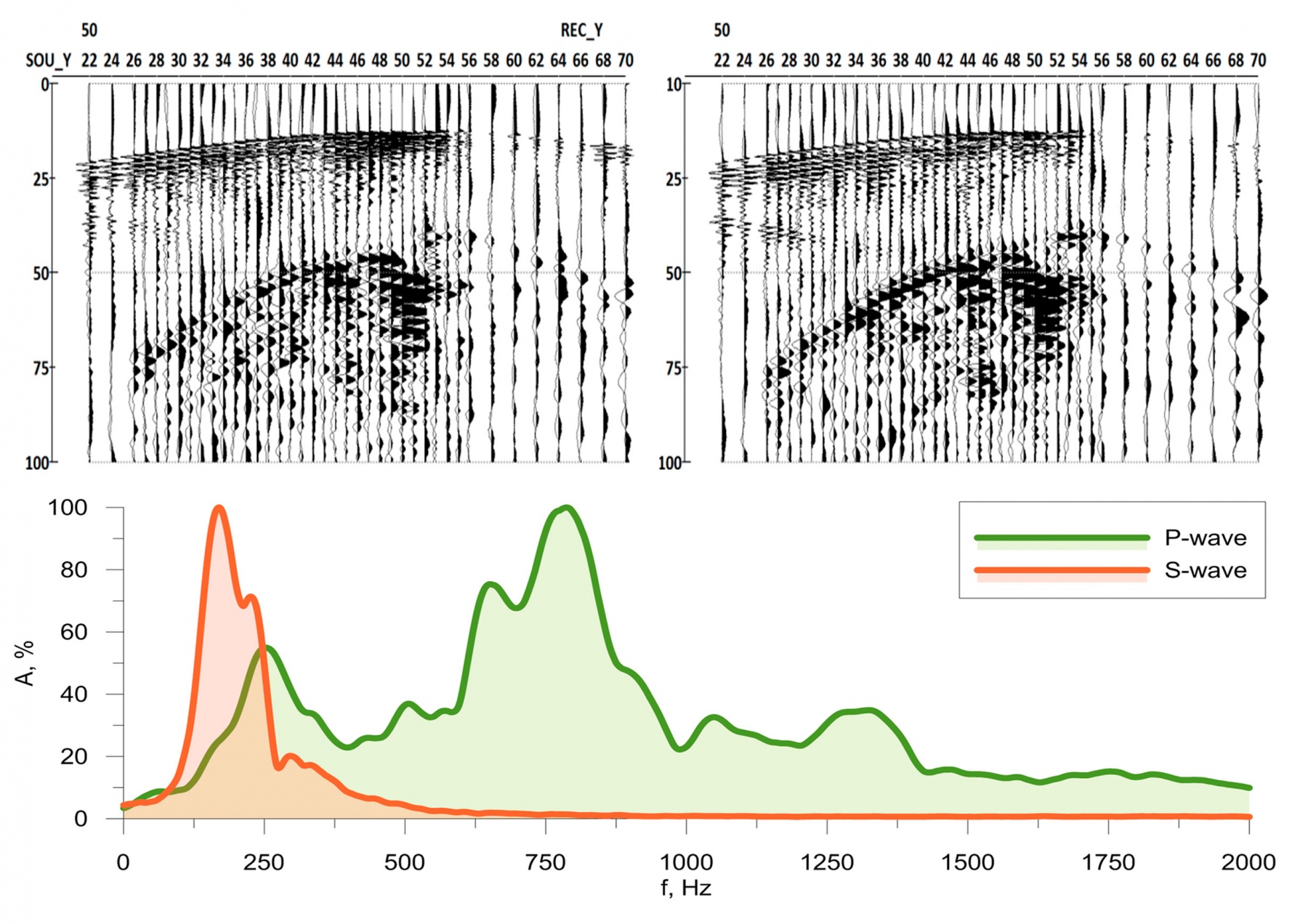
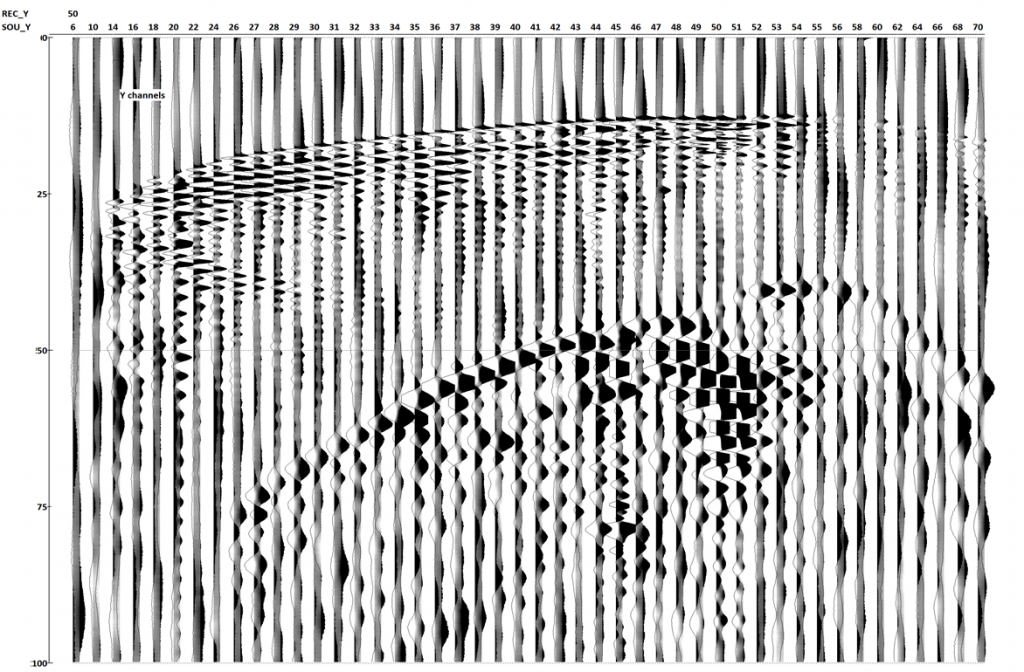
Common receiver gather, acquired by SHock borehole seismic source and three-component (3C) geophones, located in the nearby well.
Two gathers are shown on the top, P and S waves spectra are shown on the bottom. Source operation was provided by energy source Jack.
Sedimentary rocks, approximately 30 meters between wells, the source is located at a depth of 50 meters, data collected by GStreamer with receiver depths from 22 to 70 meters.
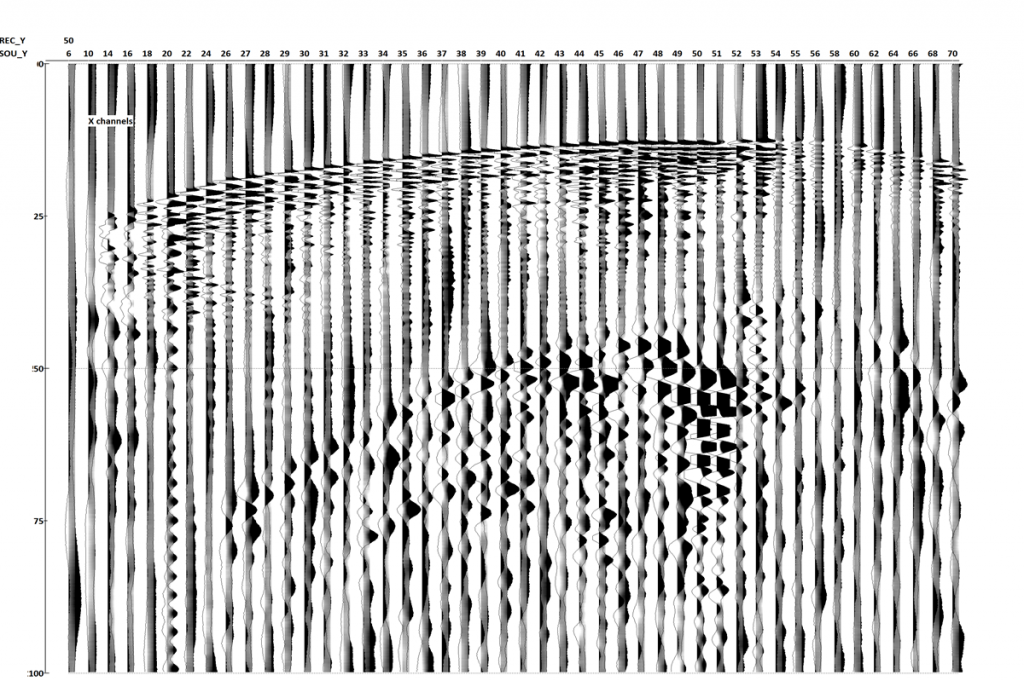
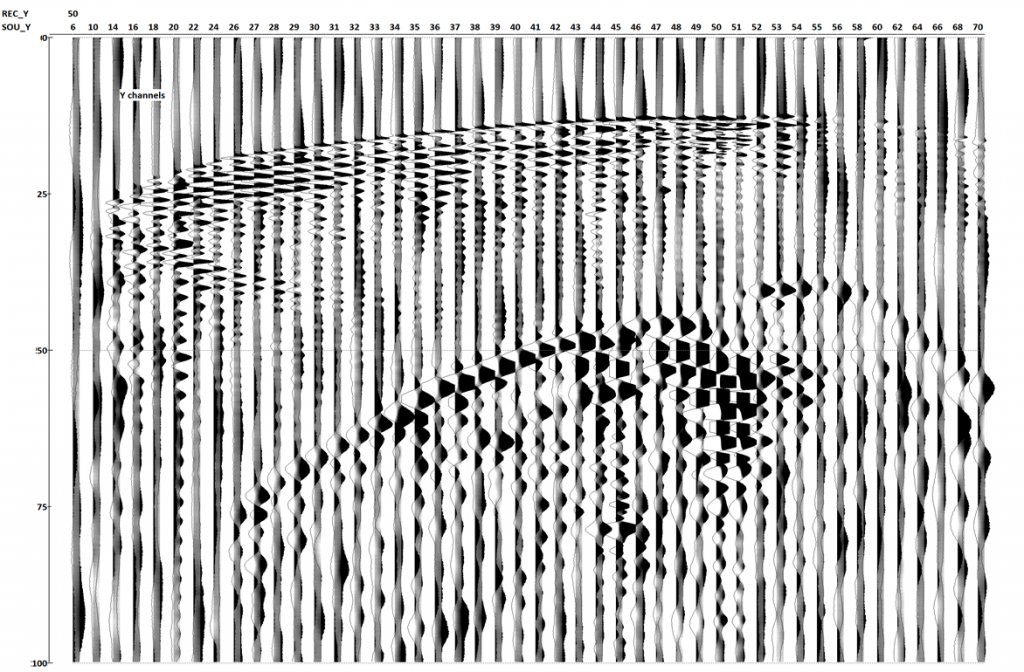
Common receiver gather with non-oriented X and Y components. Shots with opposite polarity are overlaid on each trace.
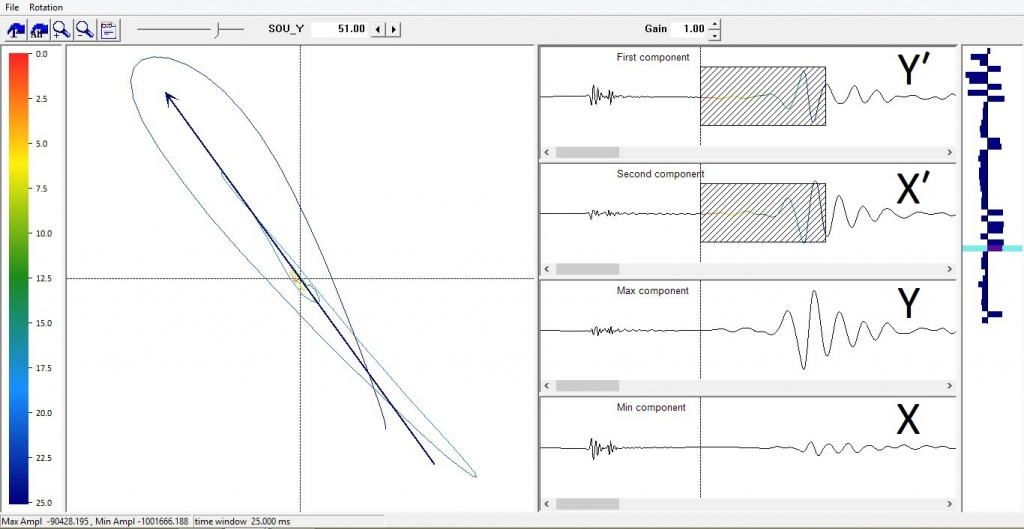
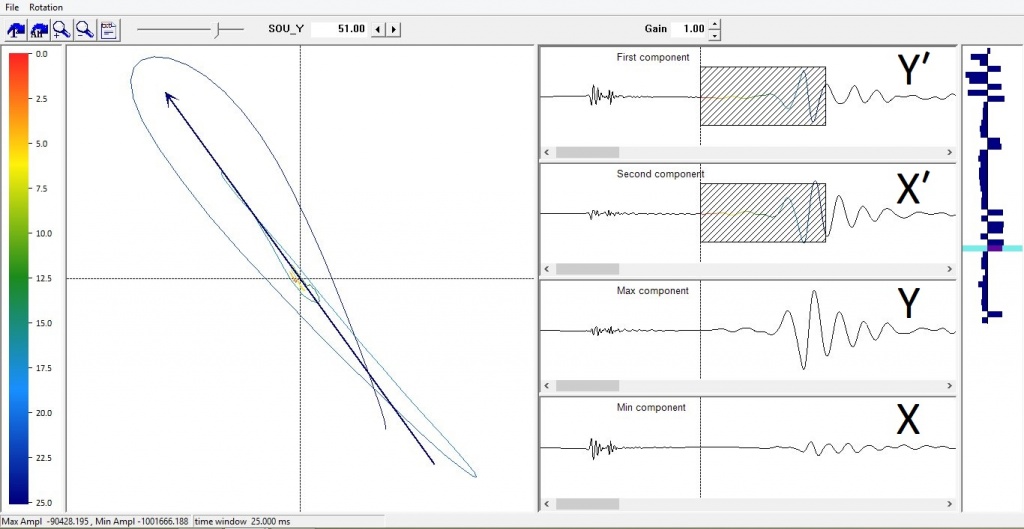
Orientation of horizontal components (Uy, Ux) using RadExPro seismic software.
The hodogram on the left represents particle motion trajectory of the earth of two horizontal components for the selected part of the first breaks. Unrotated traces in acquisition coordinates (Y’, X’) and rotated traces (Y’, X’) in radial-transverse coordinates are shown on the right. This procedure is a standard VSP processing routine and allows to use 3C receivers without any additional components or compasses that take up extra space in the probe, making it more expensive and heavier.
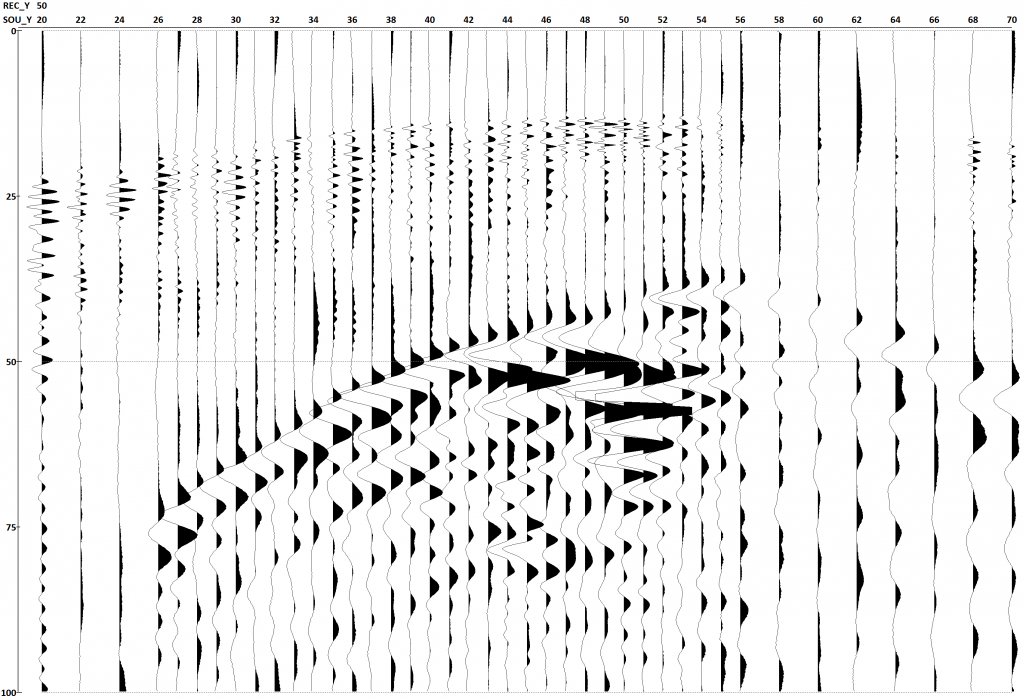
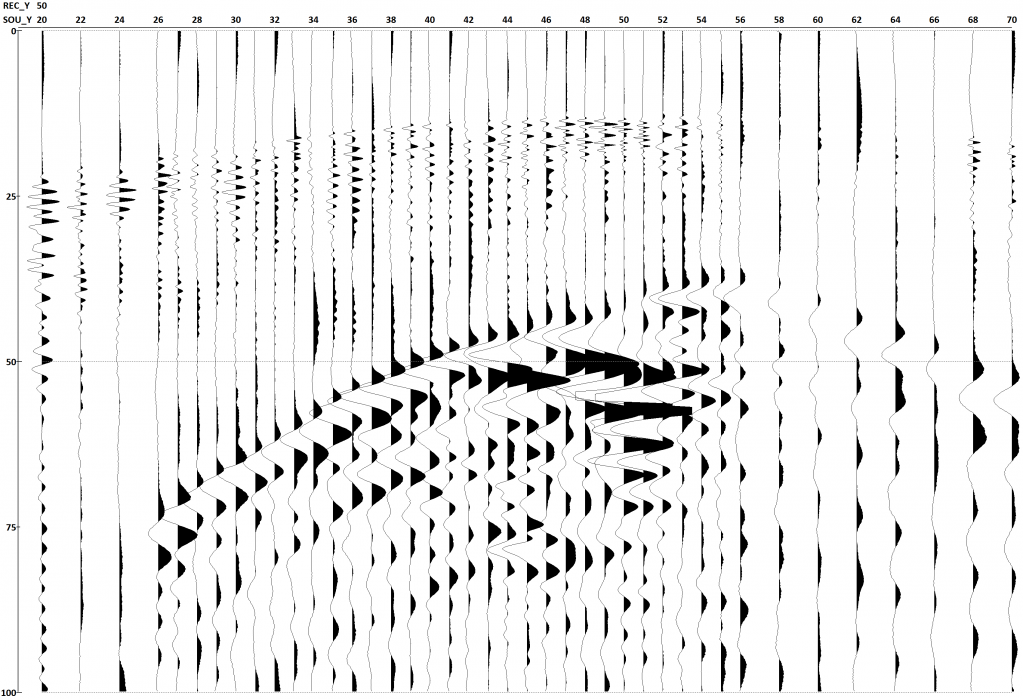
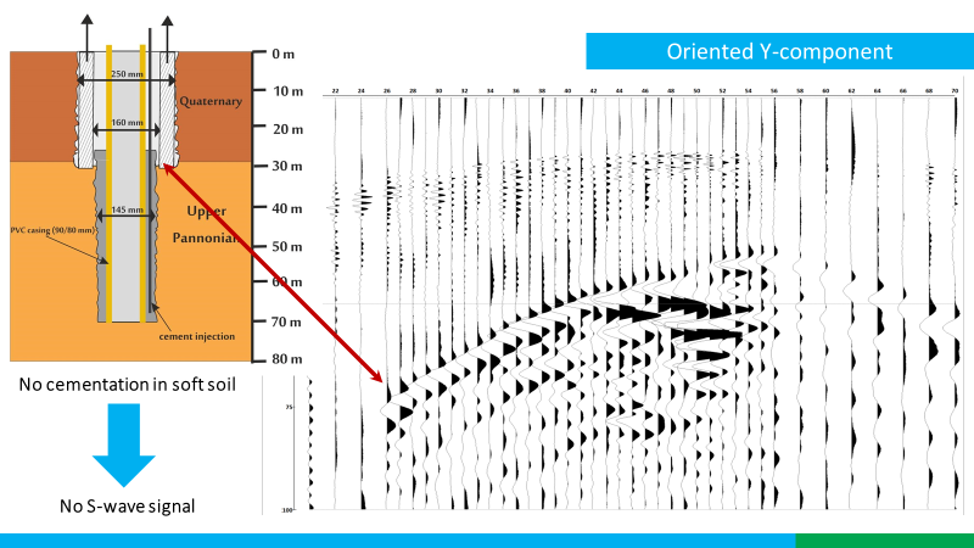
Example of data after 3C records orientation and subtraction of “right” and “left” blows
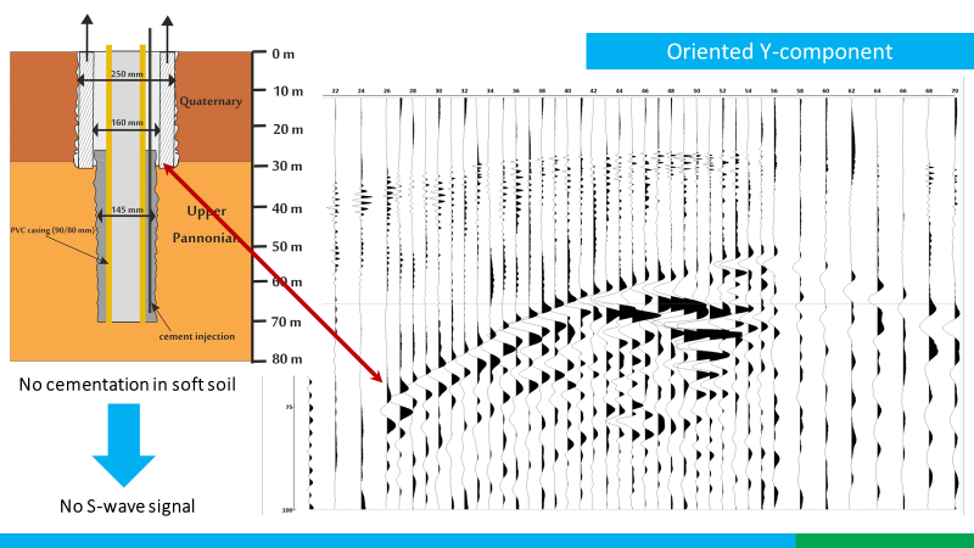
CST survey on P and S waves requires preparing wells in accordance with ASTM D4428/D4428M, i.e. working in an open borehole or cementing the annular space in case PVC well casing is used.
| Operating voltage | up to 6000 V |
| Operating energy | up to 1500 J |
| Well diameters | 70-140 mm |
| Diameter | 65 mm |
| Length | 970 mm |
| Dimensions on a reel | 570×550×650 mm |
| Weight with a reel and a 130 m pneumo-electric line | 93 kg |
GStreamer – 3C multi-level downhole seismic array with spring anchoring
Borehole hydrophone array WellStreamer
- Specifically designed for HR borehole surveys
- Fast and simple infield operations
- High sensitive acceleration-free piezoceramic sensors
- Small diameter and light weight
- Compatible with any seismograph
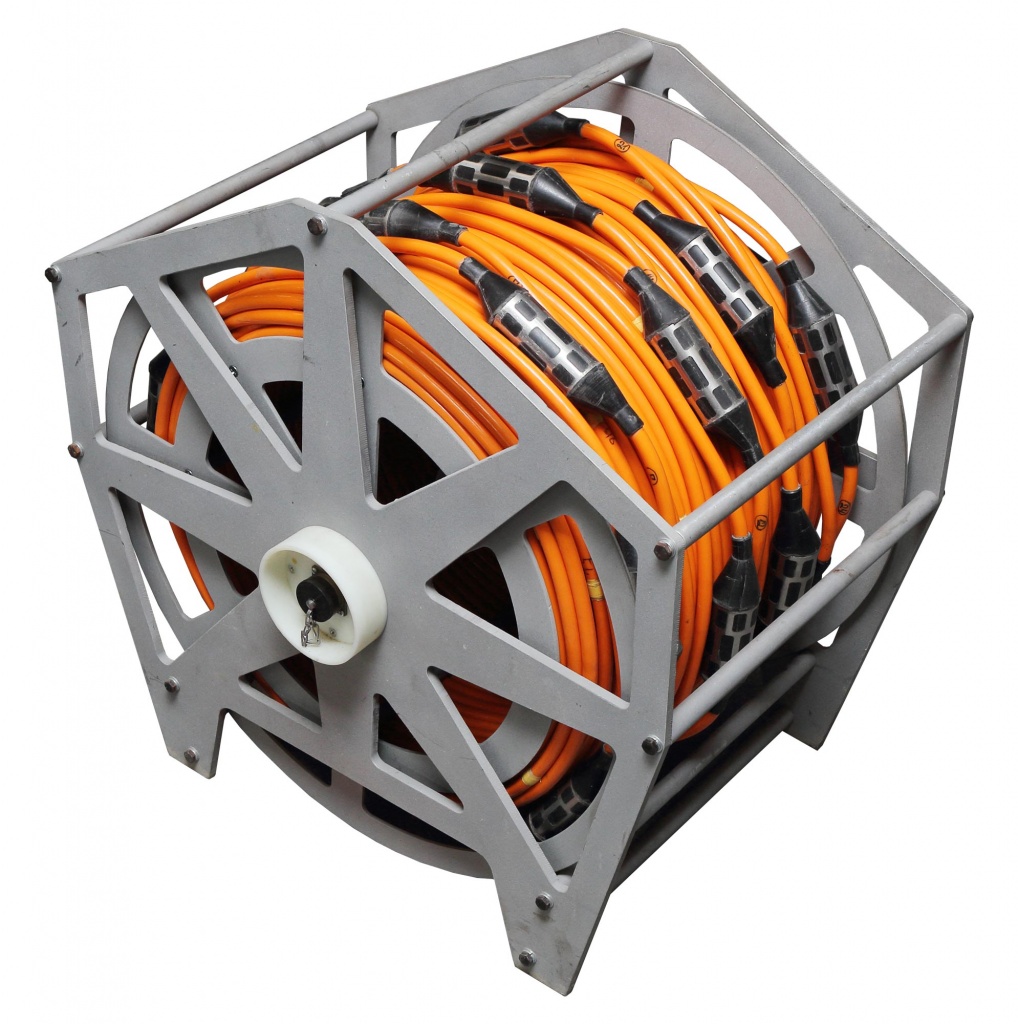
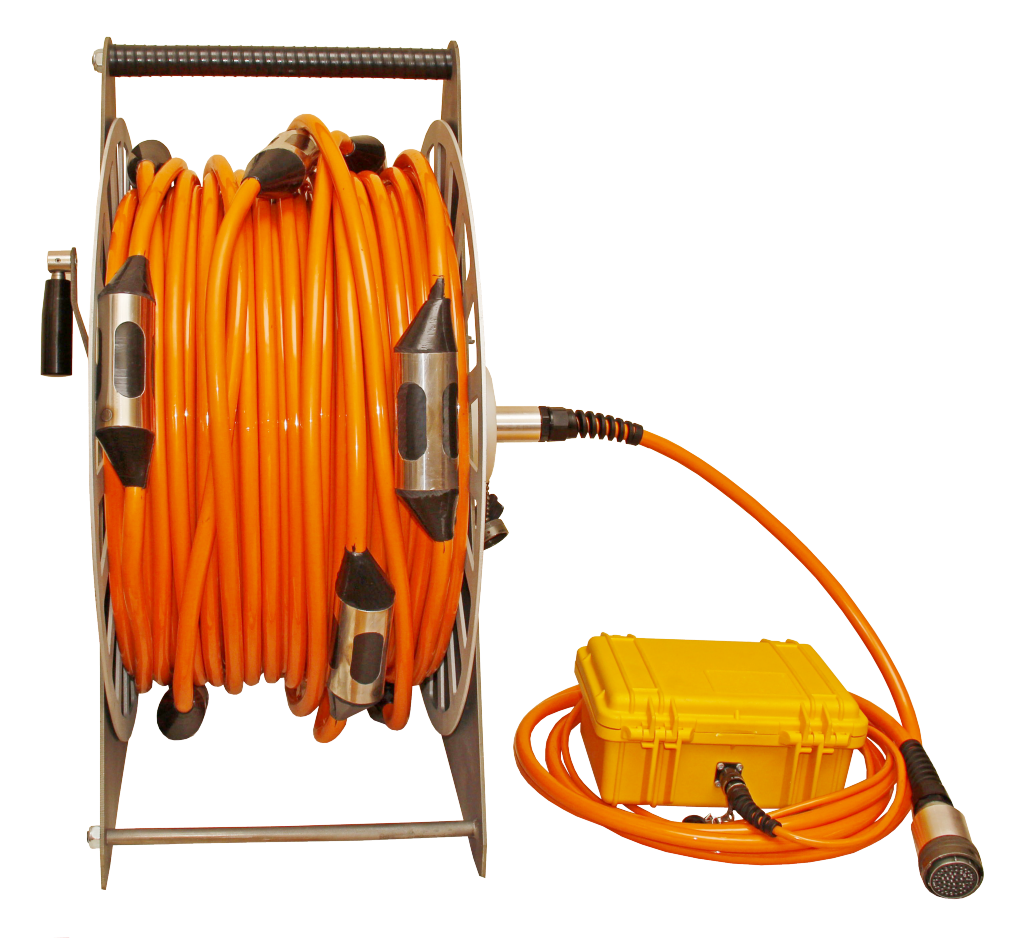
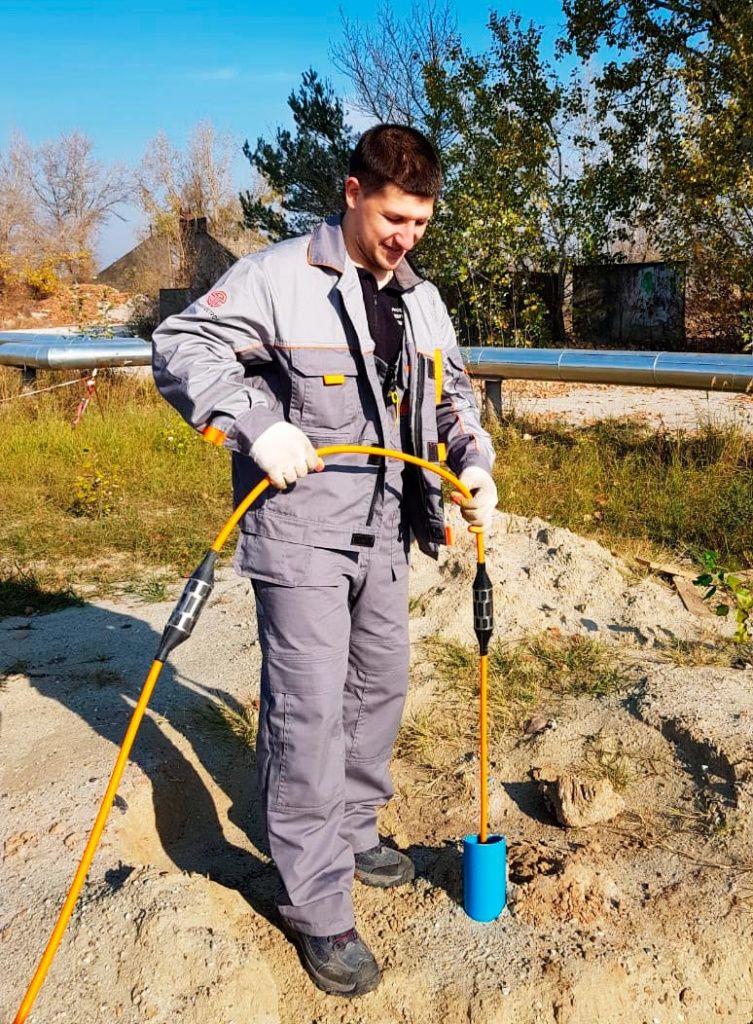
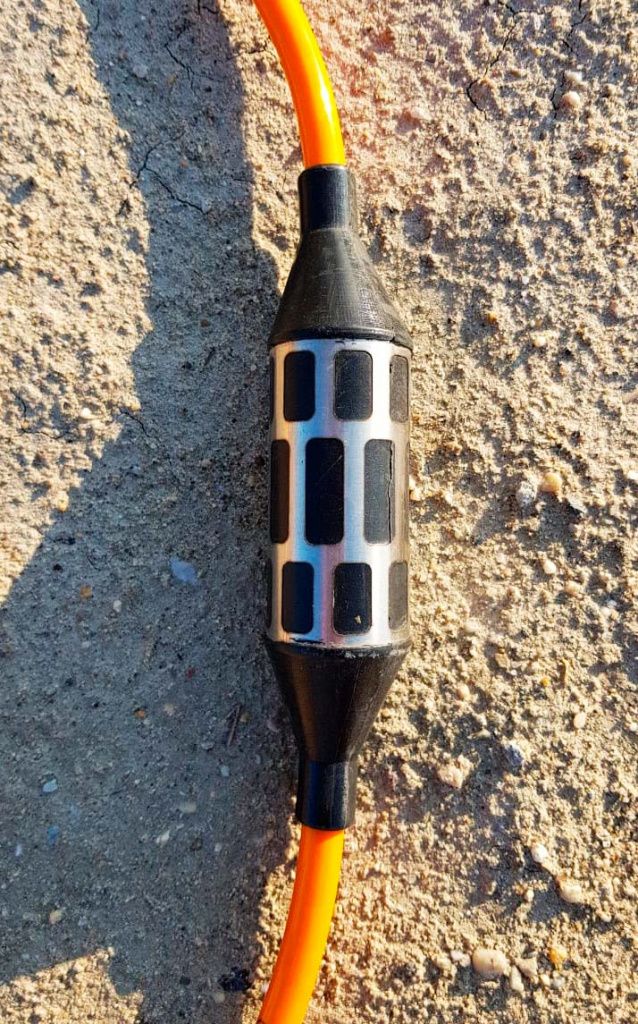
WellStreamer is a borehole hydrophone array, specially developed for seismic acquisitions in water-filled wells. We designed an exceptionally easy to use and robust receiver tool with sensitive acceleration-free piezoceramic sensors and signal preamplifiers in each module for registering compressional (P) waves during VSP, cross hole surveys, parallel seismic testing, and other high-resolution borehole seismic techniques. WellStreamer is also used for geotechnical monitoring of the structure of berths, dams, and other hydraulic structures – in this case, it can be located below the water surface on one side of the construction. Measuring the length of piles by parallel seismic testing, geotechnical control of the soil stabilization process, control of the continuity and thickness of the ice wall during the mine shaft construction are also hydrophone array applications.
WellStreamer can be supplied in various configurations, starting from 4 channels and up to 48 units with a typical separation of 1 m or 2 m. It can be equipped with a connector for reference land geophone to control source-seismograph synchronization during VSP survey and to improve the accuracy of interval velocities calculation. Signal registration is provided by almost any seismograph.
Mounted on a reel with a slip ring, which can be ordered with the streamer, it provides easy to operate data acquisition solution without spending time on unplugging equipment during cable operations. The convenience and safety of work in deep wells are ensured by specialized winches BGW and BGW light.
WellStreamer and 3C borehole array (GStreamer / GStreamer-P / GStreamer-E) with sources of pressure and shear waves Pulse, Shocks, or GeoSV is an advanced equipment set for Crosshole Seismic Testing (ASTM D4428 / D4428M) or multiwave tomography with P and S waves registration. These technologies are designed to determine the Poisson’s ratio and dynamic moduli of the studied geological layers in natural occurrence. Please see details here.
Areas of application of WellStreamer:
- Borehole seismic surveys on land and in water areas using cross-hole seismic testing and tomography (CST), vertical seismic profiling (VSP), high-resolution VSP, low-frequency acoustic logging, seismic side scanning, etc.
- Engineering surveys for the construction of highly sensitive facilities
- Search for karsts, fractured and deconsolidated zones, and mining geophysics
- Mineral exploration
- Geotechnical monitoring of the soil foundation and determination of its load-bearing capacity, including in accordance with ASTM D4428 / D4428M standard
- Crosshole logging of concrete foundations, piles, retaining walls, diaphragm foundations, dams, etc.
- Soil stabilization control
- Control of the continuity and thickness of the ice wall during the mine shaft construction
- Cracks location in concrete hydroelectric dams
- Parallel seismic testing of pile or foundations
Delivery set:
- Hydrophone array WellStreamer
- Battery with charger
- Holder for fixing the array on the wellhead
In addition to hydrophone array WellStreamer the following items can be purchased:
- Reel with slip ring
- BGW or BGW light winch
- Energy source Jack with remote control JackPad
- Borehole sources of pressure (P) waves (Pulse) or shear (S) waves of horizontal (SHock) and vertical (GeoSV) polarization
- Single and multi-level 3C borehole probes with spring (GStreamer), pneumatic (GStreamer-P), and electromechanical (GStreamer-E) anchoring systems
- High-frequency seismographs Sigma 4+ or DAQlink 5
- Borehole inclinometer INCLIS
| Number of channels | 4, 6, 12, 24, or 48 |
| Operating frequency | 10 – 10 000 Hz |
| Electric capacity of the piezoelectric element | 4 000 pF |
| Sensitivity of the piezoelectric element | 180 µV / Pa |
| Maximum working pressure | 60 atm |
| Destructive pressure | > 100 atm |
| Sensitivity to accelerations | acceleration-free |
| Change in sensitivity depending on the depth | no |
| Type of the preamplifier | low-noise asymmetrical |
| Gain of the preamplifier | 6 dB |
| Power supply voltage | bipolar from ±11 to ±16 V |
| Current per channel | 10 mA |
| Output impedance of the preamplifier | 395 Ω |
| Maximum value of the output signal | ±3.8 V |
| Mean square voltage of the intrinsic electrical noise (output) in the working bandwidth does not exceed | 10 µV |
| Operating temperature range | -10 ÷ +70 °С |
| Storage temperature range | -40 ÷ +70 °С |
| Hydrophone module diameter | 42 mm |
| Length of the hydrophone module | 200 mm |
| Weight of the hydrophone module | 300 g |
| Inter-hydrophone distance on the array | on request, but ≥ 0.25 m |
| Cable shielding material | polyurethane |
| Longitudinal hermitization of the cable | yes |
| Shielding of the cable and hydrophone module | yes |
| Cable reinforcement | kevlar |
| Working load | 200 kg |
| Breaking load | > 400 kg |
| Cable diameter | 13 mm |
| Minimum bend radius of the cable | 120 mm |
| Minimum bend radius of the active section | 220 mm |
| Cable weight | 168 g/m |
| Weight of the 130-meter hydrophone array with a reel | 38 kg |
| Dimensions on a reel | 760×775×400 mm |
| Maximum length of the hydrophone array | 700 m |
| End connector | by agreement |
GStreamer – 3C multi-level downhole seismic array with spring anchoring GStreamer-P – multi-level 3C borehole seismic array with pneumatic anchoring system
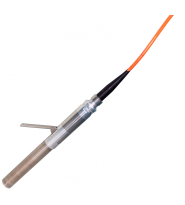
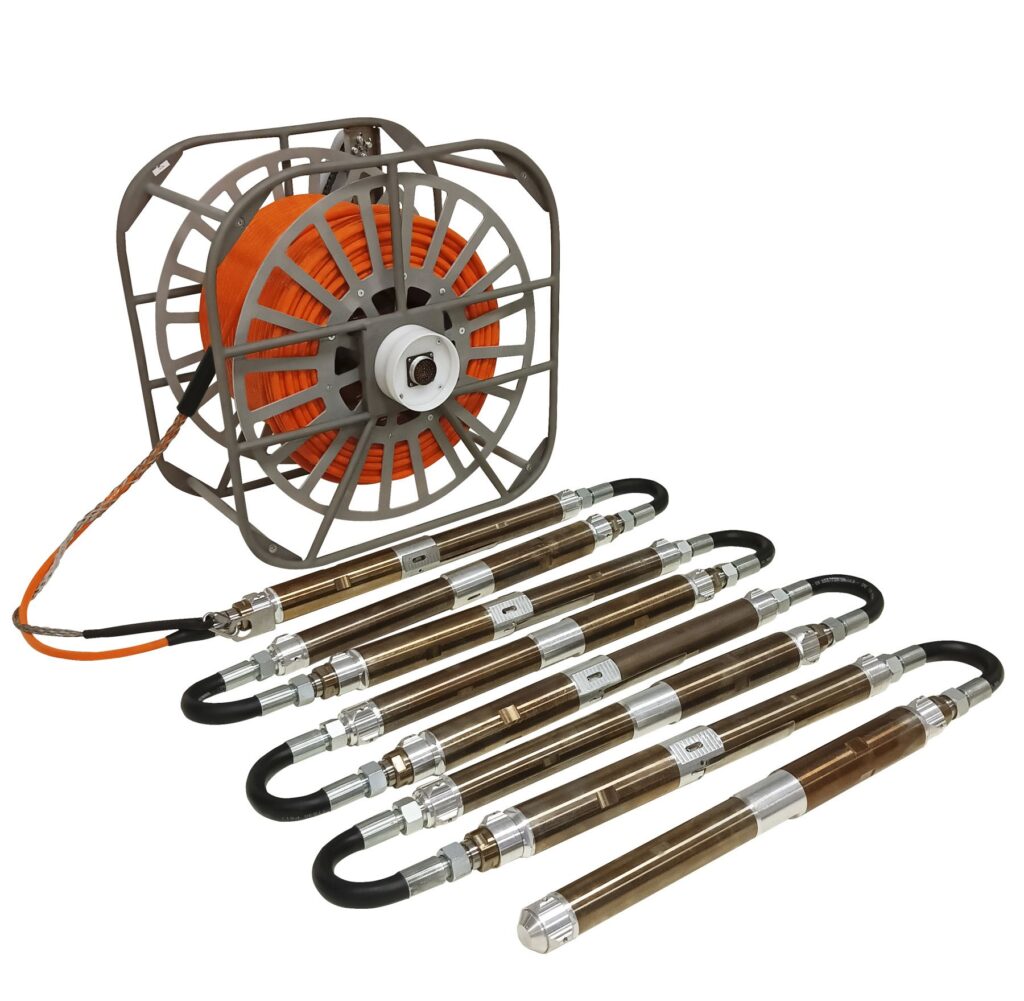
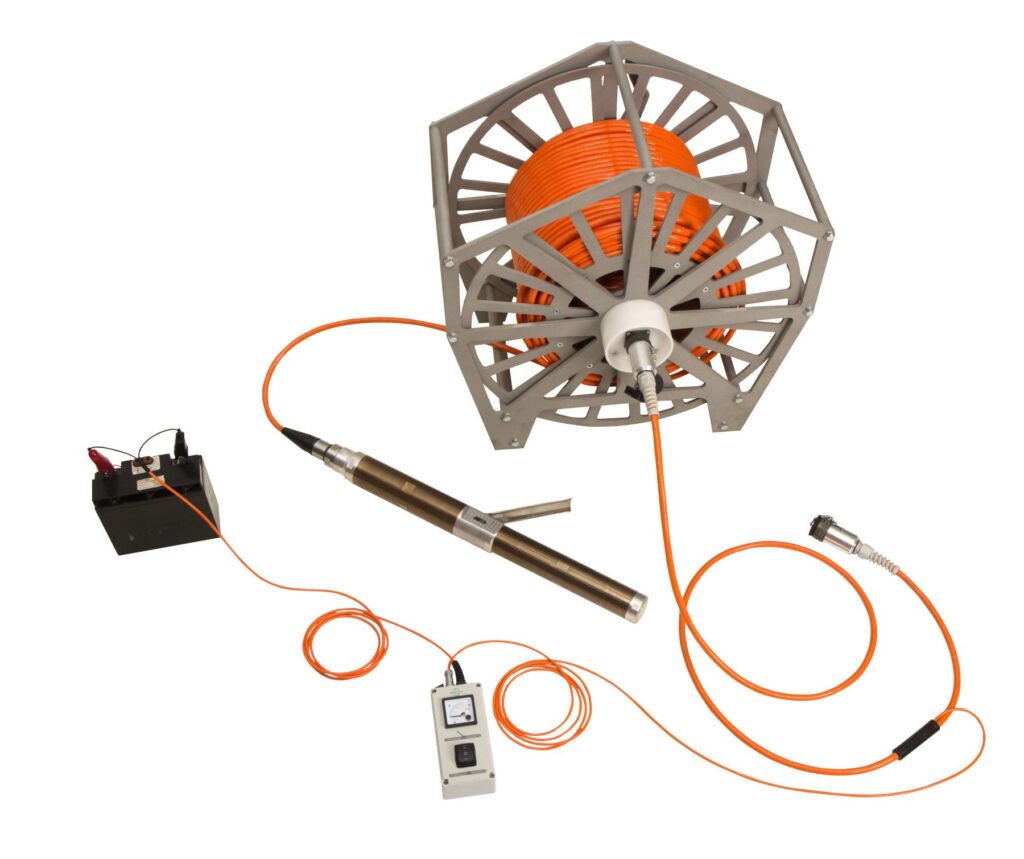
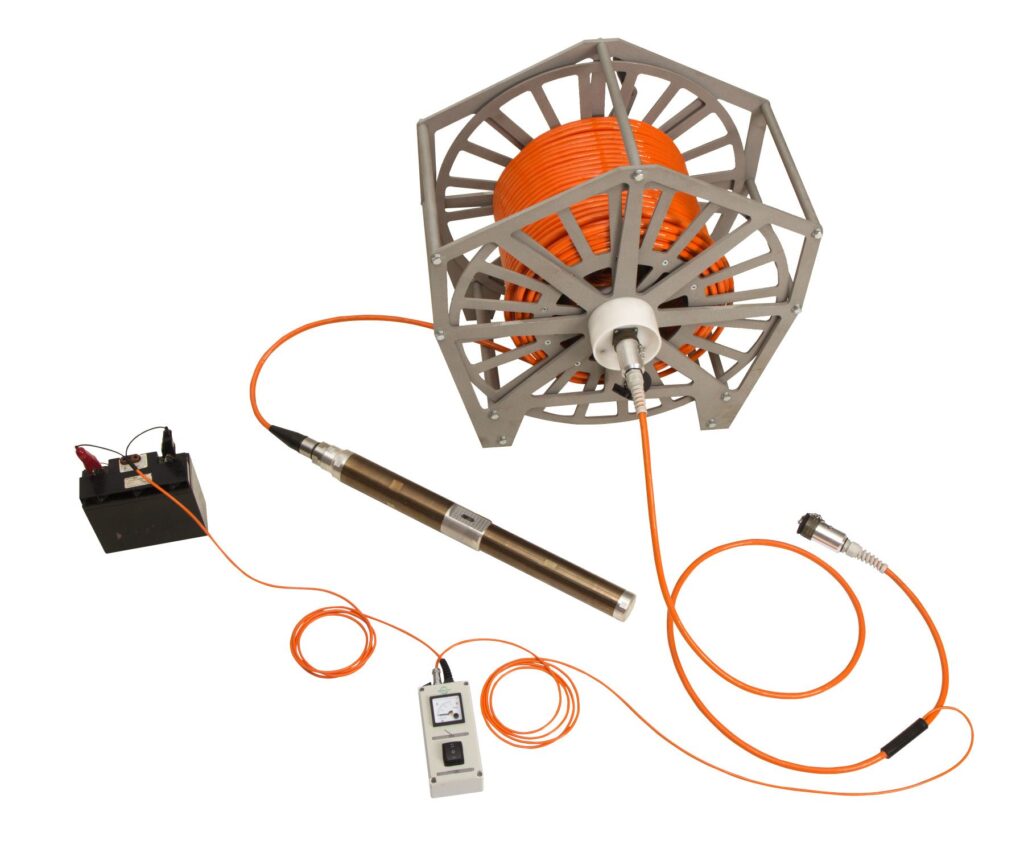
Multi-level 3C borehole seismic array GStreamer-E with motor driven anchoring system
- Geared motor driven anchor
- Reliable fixation in the well
- Individual control of tool anchoring
- No limit on data sample rate
- For open hole or cased wells up to 1000 m deep
GStreamer-E is a multi-level borehole 3C seismic array with a geared motor driven anchor in each module. The system was developed for vertical seismic profiling (VSP), downhole seismic logging, cross-hole seismic testing and tomography (CST). Tool anchoring individual control allows to eliminate intermodular cable sections tension and the acoustic connection along it. Controlled anchoring also permits the use of GStreamer-E in both cased and open hole wells up to 1000 m deep. It can consist of 1, 4 or 8 3C borehole geophones.
Three pairs of orthogonally combined geophones with a natural frequency of 12 Hz or 20 Hz are used as sensitive elements. Signal registration is provided by almost any seismograph. Upon request, the tool can be equipped with lower frequency sensors, but this will slightly increase its dimensions.
GStreamer-E can be equipped with a connector for reference land geophone to control source-seismograph synchronization and improve the accuracy of interval velocities calculation.
GStreamer-E with borehole source SHock of horizontally polarized shear wave (SH) is an advanced set of equipment for cross-hole seismic tomography survey in dry and water-filled wells with a distance between them up to 30 m. GeoSV would be enough for cross-hole seismic testing in accordance with ASTM D4428 / D4428M. Borehole sparker Pulse allows to significantly increase distances between the wells. You can read about these techniques here. All borehole sources are operated by pulsed power supply Jack.
Multi-level probe GStreamer-E can be supplied on a reel with a slip ring. The efficiency and safety of work in deep wells are ensured by BGW and BGW light winches.
Delivery set:
Single level 3C system:
- GStreamer-E tool on cable
- Single channel anchoring system remote control
- 4 or 8 GStreamer-E tools on cable
- Multi-channel anchoring system remote control
In addition to GStreamer-E the following items can be purchased:
- Reel for 12-channel GStreamer-E
- Reel for 24-channel GStreamer-E
- BGW or BGW light winch
- Energy source Jack with remote control JackPad
- Borehole sources of pressure P (Pulse) or shear SH-waves (SHock) and SV-waves (GeoSV)
- Borehole hydrophone array WellStreamer
- High-frequency seismographs Sigma 4+ or DAQlink 5
- Borehole inclinometer
We have also developed multi-level 3C downhole seismic array GStreamer with a semi-active spring anchoring system, as well as simpler and cheaper GStreamer-P with pneumatic driven anchors.
Delivery set:
Single level 3C system:
- GStreamer-E tool on cable
- Single channel anchoring system remote control
Multi-level 3C array:
- 4 or 8 GStreamer-E tools on cable
- Multi-channel anchoring system remote control
In addition to GStreamer-E the following items can be purchased:
- Reel for 12-channel GStreamer-E
- Reel for 24-channel GStreamer-E
- BGW or BGW light winch
- Energy source Jack with remote control JackPad
- Borehole sources of pressure P (Pulse) or shear SH-waves (SHock) and SV-waves (GeoSV)
- Borehole hydrophone array WellStreamer
- High-frequency seismographs Sigma 4+ or DAQlink 5
- Borehole inclinometer
We have also developed multi-level 3C downhole seismic array GStreamer with a semi-active spring anchoring system, as well as simpler and cheaper GStreamer-P with pneumatic driven anchors.
| Model | GStreamer | GStreamer-P | GStreamer-E |
| Number of levels | 4 or 8 | 4 or 8 | 1, 4, or 8 |
| Anchoring | spring system | pneumatic cylinder | geared motor |
| Well casing type | PVC | any or open hole | any or open hole |
| Number of components | 3 | 3 | 3 |
| Geophones natural frequency | 12 Hz or 20 Hz (on request) | 12 Hz or 4.5 / 20 Hz (on request) | |
| Tool locking | remote triggering | simultaneous | individual |
| Clamping force | 1:7 – 1:11 | 1:11 at 7 atm. | 1:11 |
| Maximum tool diameter | 60 mm | 58 mm | |
| Well diameter range | 70 – 150 mm | 65 – 150 mm and more with anchor extenders | |
| Maximum operating pressure | 15 bar | >100 bar | |
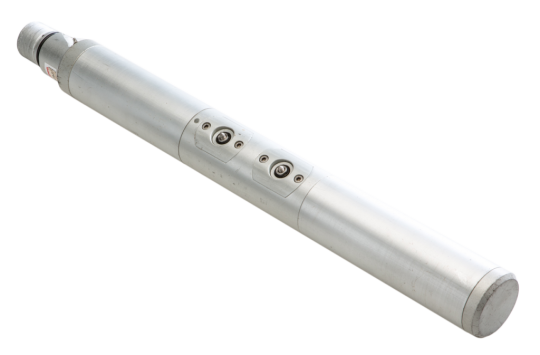
Borehole source of SV-waves GeoSV 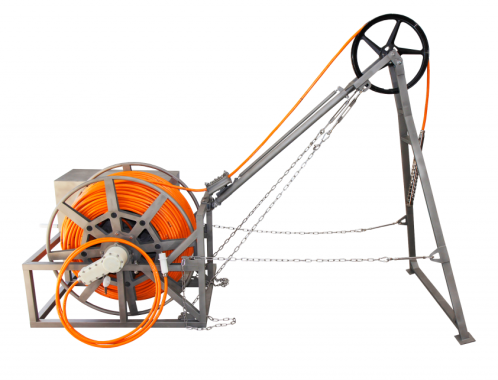
BGW winch for borehole seismic survey

Equipment & Software for Geophysical Surveys: Design, Manufacture, Support, Supply
GEODEVICE is a group of specialized companies that develops, manufactures, and supplies
advanced geophysical equipment and software for a wide range of applications, from land-
based surveys to marine and borehole explorations.
The key areas of GEODEVICE developments are high and ultra-high resolution marine seismic,
borehole seismic, land, drone and marine magnetic.
The focus is on a broad range of industries and scientific fields, providing tailored solutions for:
- Geotechnical Monitoring
- Engineering Surveys
- Environmental Surveys
- Archaeological Surveys
- Geophysical Support for Geological Exploration
Let’s Connect
Need assistance? Get in touch with our team.